


Common Glass Pool Fencing Safety Issues Homeowners Overlook
February 16, 2026
Glass pool fencing in Sydney is often chosen for its clean lines, unobstructed views and ability to complement modern landscaping. Many homeowners assume that if the fence is made of toughened glass and meets basic height requirements, it is automatically safe. Poolsafe Fencing experiences the real picture, and it is more complex. Critical safety details are frequently overlooked during design, installation and everyday use, which can quietly undermine the protection the fence is meant to provide.
Explore the most common glass pool fencing safety issues that slip past homeowners and sometimes even general contractors. Readers will learn how seemingly minor gaps or misaligned panels can create climbable points or entrapment hazards, why gate hardware and self-closing mechanisms fail more often than expected and how ground movement and weather affect long-term safety performance. It also covers typical compliance blind spots and turns a safe barrier into an easy ladder. By understanding these issues, homeowners can decide about new installations, identify risks around existing glass pool fences and ensure their pool area remains both stylish and genuinely safe for family and guests.
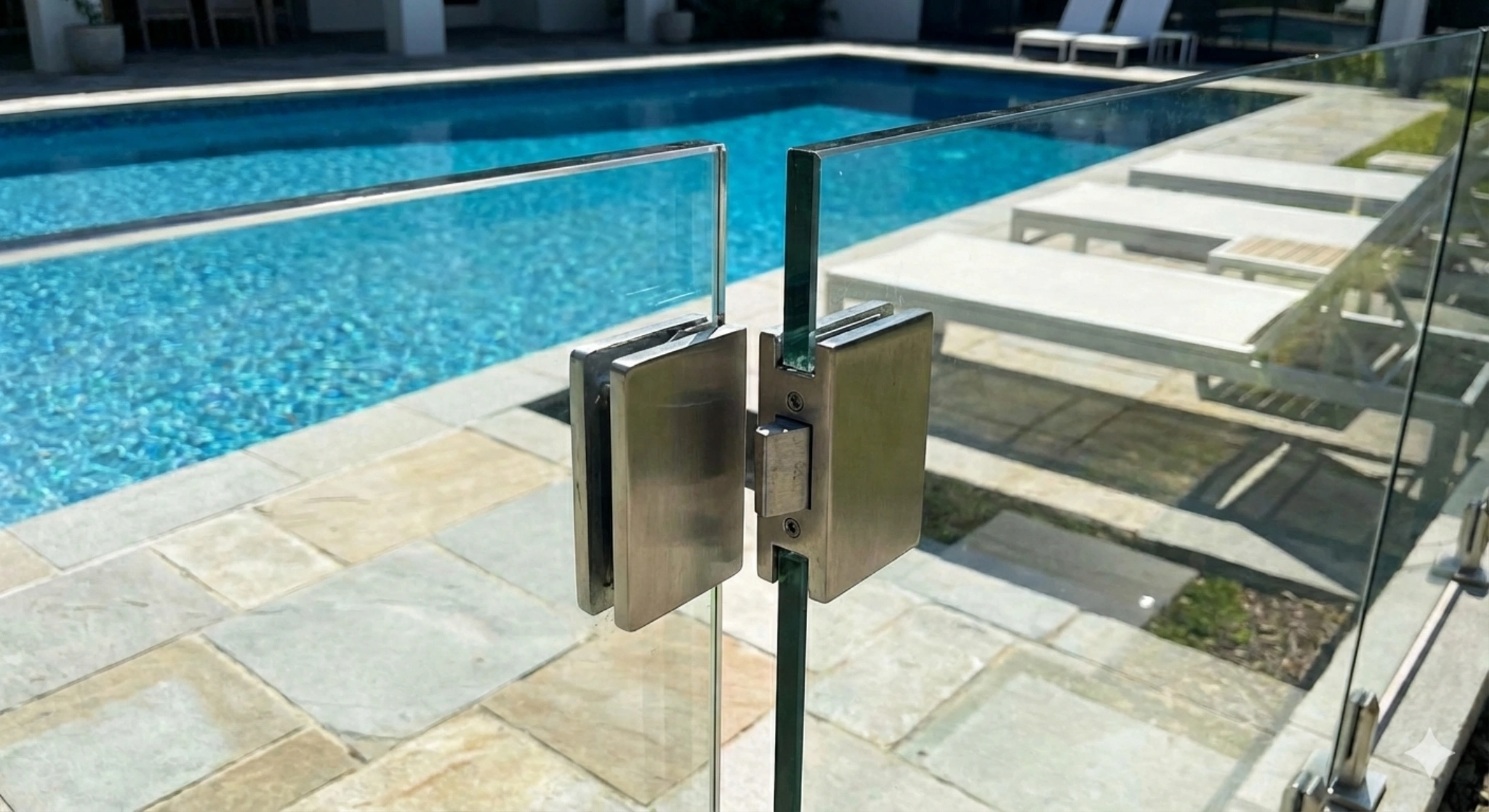
Pool gates that do not latch or close reliably are one of the most common weak points. Many assume that if the fence is sturdy, the pool is safe. But a gate that does not fully close or lock every single time can render the whole barrier ineffective.
Pool fence installers regularly see minor issues like slow closing, misaligned latches or gates that need a “hard pull” to shut. These small faults can easily allow a child to slip through unnoticed. Knowing how a compliant gate should function and what can cause it to fail helps homeowners pick up problems early.
A compliant pool gate should close and latch automatically from any open position without help from the person passing through. That means if the gate is released from a few centimetres open or fully open, it should swing shut on its own, and the latch should engage securely.
The latch must be at the required height so young children cannot reach it. Also, it should be on the poolside or shielded. When the gate is latched, it should not be possible to pull or push it open without operating the latch. A properly adjusted gate will also not drag on the ground or glass, which can slow or stop the self-closing.
Homeowners can do a simple check by opening the gate to several points and letting it go. If it hesitates, bounces off the latch, stops short or fails to click firmly into place, there is a safety issue that needs attention.
Over time, hinges and latches on glass pool gates can move out of alignment due to ground movement, thermal expansion, children swinging on the gate or general wear and tear. Even a few millimetres of movement can be enough to stop the latch, aligning with the striker.
Hydraulic or spring-loaded hinges can lose tension, which slows the closing speed. If the gate closes too softly, it may not have enough momentum to engage the latch, especially in light wind. Conversely, if the hinge tension is too high, the gate can slam and bounce off the latch.
Build-up of dirt, sand or salt in the latch body is another frequent problem. This can stop the mechanism from fully returning to the locked position. Homeowners often overlook simple obstructions that can interfere with the swing of the gate and prevent a complete close.
Regular checks are essential. Installers recommend that homeowners:
If the gate fails any of these checks, adjustments are usually required. Small hinge tension changes or latch alignment tweaks can sometimes be done by the homeowner using the manufacturer’s instructions.
Incorrect gaps at the bottom of glass pool fencing or between the panels are one of the most common safety issues experts see during inspections. These gaps can allow children to squeeze through, get a foothold to climb or create spaces that a determined child can exploit to access the pool area. Even if the fence looks solid at first glance, small measurement errors can mean it does not comply with safety standards.
Getting these clearances right is not just about passing inspection. They are critical to reducing drowning risk, particularly for toddlers who can fit through surprisingly small spaces.
The gap between the bottom of the glass panel and the finished surface must be tight and consistent. If the clearance is too large, children can attempt to crawl under or wedge objects into the space to help them climb.
Common causes of incorrect ground level gaps include uneven paving or decking slabs, installing the fence before final landscaping levels are set or using spigots that are not correctly adjusted. Even a slope across a patio can leave one end of a panel within the allowed clearance and the other end non-compliant.
Installers often find issues where:
Homeowners should regularly check the bottom gap along the full width of each panel after any changes to paving, decking or garden levels and after significant ground movement. If light is clearly visible in places where it was not before, or if a ball or toy can roll under the panel, it is worth having the gap professionally measured.
Gaps between adjacent glass panels or between a panel and a wall or post can also be a weak point in the barrier. Even small inconsistencies along a fence line can create one spot that is large enough for a child to attempt to squeeze through.
Incorrect panel spacing usually happens when measurements were not taken carefully, when replacement panels have been fitted that are slightly different in size or when posts or spigots have shifted. Misaligned gate panels are a particular concern, as movement in the hinges or latches can increase the gap near the opening. Look for:
If any gap looks suspicious, pool fence installers recommend a compliance check and professional adjustment so the fence meets required clearances along its entire length.
Loose hardware and subtle glass panel movement often develop so slowly that homeowners barely notice until the fence is no longer performing as a safe barrier. Pool experts regularly find that what starts as a minor wobble, a slightly leaning panel or a bit of corrosion around a fixing can quickly turn into a genuine safety risk for children and visitors.
Understanding how fixings loosen, how weather affects glass pool fencing and what to check for allows issues to be picked up early. With simple routine inspections and timely maintenance, many of these problems can be corrected long before they compromise safety or compliance.
Every glass fence relies on secure fixings to hold each panel firmly in place. These may be spigots bolted to concrete, posts set into paving or channel systems fixed along a slab or deck. Eventually, movement from people leaning on the fence, gate operation, minor ground settlement and thermal expansion can cause fixings to loosen.
Typical early signs include a small amount of movement if a panel is pushed, rattling noises from spigots or a gatepost that shifts slightly when the gate closes. Although this can look minor, a loose fixing transfers stress to the glass and other components, increasing the chance of breakage or failure in an impact.
Any noticeable movement at the base, visible gap changes at the bottom of panels or bolts that appear proud of the surface should be treated as a prompt to have the fixings inspected and re-tensioned or replaced.
When fixings start to loosen or substrates move, panels can go out of alignment. This affects appearance and safety. Misaligned panels may create gaps that do not meet pool safety regulations, especially near the ground or around steps and raised areas.
Panel movement is often first noticed around the gate. Homeowners might see the latch no longer lining up cleanly, the gate dragging slightly on tiles or decking or the auto-close not fully latching from every open position. All of these are warnings that either the hinges or adjacent panels have shifted.
If a gate does not self-close and latch every time, it fails a fundamental safety requirement. It is advised that any change in gate operation be treated as urgent. Sometimes, a simple hinge adjustment solves the issue. But in other cases, underlying panel movement or loose fixings must be corrected to restore proper function.
Glass pool fencing is exposed year-round to sun, rain, wind and often chlorinated or saltwater environments. UV exposure can harden and crack rubber gaskets or plastic components, which reduces their ability to cushion and secure panels. In coastal or poolside conditions, stainless steel and fixings can develop surface tea staining or deeper corrosion if not maintained.
In colder climates, repeated cycles of heating and cooling cause expansion and contraction in metal, concrete and glass. This movement can fatigue fixings and widen small cracks around anchor points, which leads to loosening. Heavy storms and high winds can also place additional stress on panels, especially those at corners or in exposed locations.
To minimise weather-related wear:
Addressing these issues early usually involves simple cleaning, lubrication of moving parts and targeted replacement of weathered components rather than major repair work. Regular professional inspections help identify developing problems that may not be obvious to the untrained eye and keep the fence performing as a safety barrier.
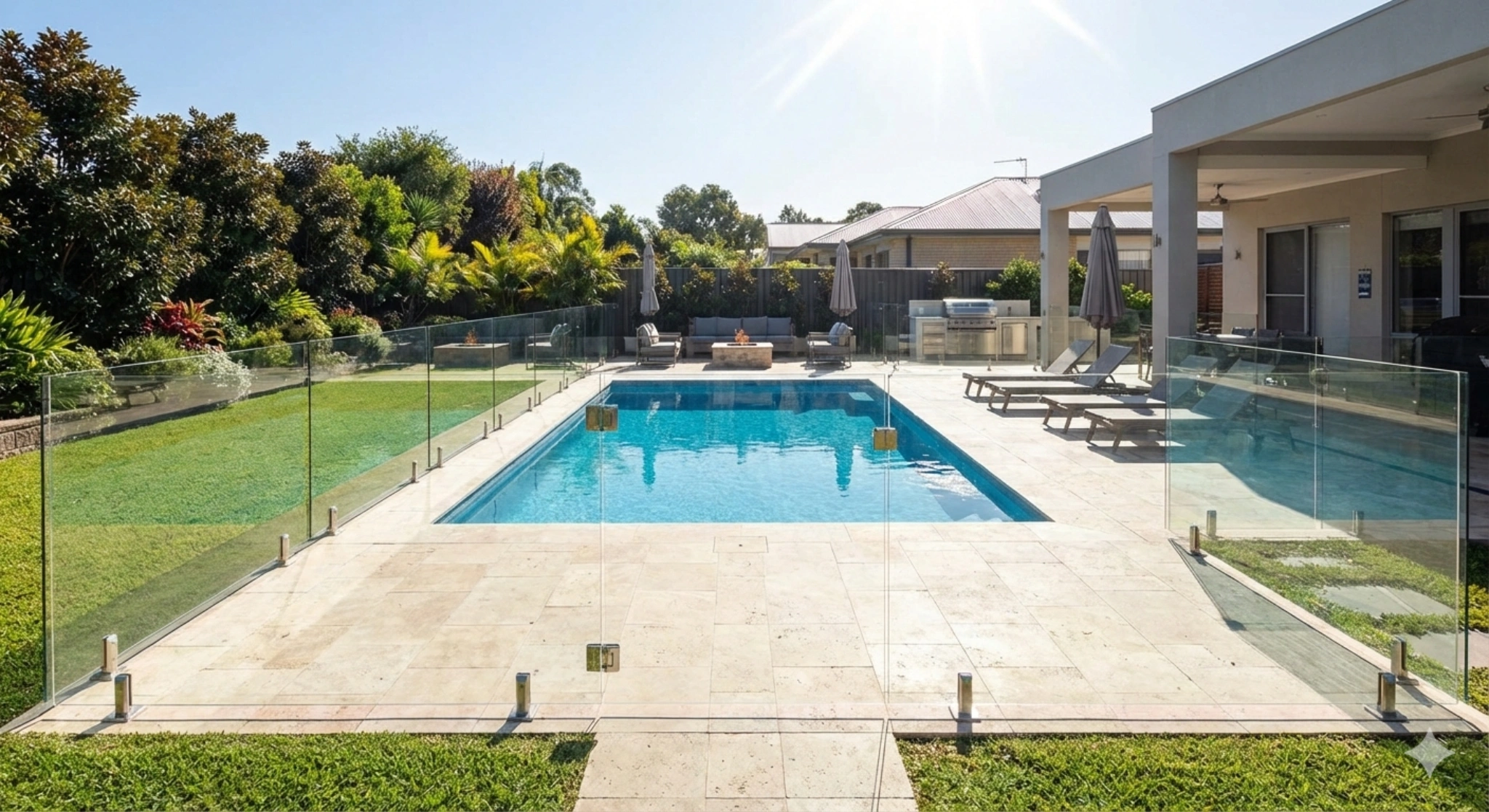
Many assume that if a fence is made of glass, it is automatically strong and safe. In reality, the safety of a glass pool fence depends on the type and thickness of the glass and on the quality of the hardware and installation system. Misunderstanding any of these elements can create weak points that only show up when the fence is put under real stress.
Fencing professionals regularly find that perfectly good glass panels have been paired with substandard spigots, posts or fixings or that the right products have been installed in the wrong way. Knowing how a compliant system should be built helps homeowners spot shortcuts before they become safety issues.
For pool fencing, the minimum standard is toughened safety glass. It is designed to be much stronger than ordinary float glass. If it does break, it shatters into small blunt cubes instead of dangerous shards. Many people think that any thick glass panel around a pool is toughened, but that is not always the case with cheap or non‑compliant imports.
Laminated glass is sometimes used where extra protection is needed because it is made of two layers of glass bonded to an interlayer. If it breaks, the fragments usually remain stuck to the interlayer, and the panel tends to stay in place. This can be important in high wind areas or on raised decks where a fallen panel would leave a dangerous opening.
Homeowners should not rely on appearances to judge glass type. Compliant panels are stamped or etched near the corner with safety standards. If those markings are missing or hard to read, the glass may not meet the required standards and should be checked before anyone relies on it as a barrier.
Another common misconception is that thicker glass automatically means a safer fence. Glass thickness has to be matched to the panel height, width and how it is supported. For example, a tall, wide, frameless panel on two small spigots needs to be thicker than a shorter, semi‑frameless panel supported in posts along both sides.
Pool fencing standards specify maximum spans for each thickness of glass to limit flex and reduce the risk of breakage from impacts or wind loads. When the budget is tight, some suppliers stretch these limits by using thinner panels on wider spans or by changing the fixing layout without rechecking the loads. The fence may look fine on a calm day but can move excessively when a child leans or climbs on it.
Ask for the panel schedule that shows glass thickness, dimensions and fixing method and check that it aligns with local pool barrier standards. If a proposed design requires unusually wide panels, questions need to be asked about glass strength.
Even the strongest glass is only as safe as the system that supports it. Spigots, clamps, posts and fixings must all be engineered to handle the weight of the glass and the forces from people, wind and ground movement. A frequent issue is mixing cheap hardware with quality glass, which undermines the whole barrier.
Inferior spigots can suffer from corrosion, loose grub screws or weak base plates that bend or crack eventually. If the bolts or chemical anchors into concrete are undersized, the entire panel can fail at ground level even though the glass itself remains intact. For timber decks, fixings are tied into solid framing, not just decking boards, which can pull away under load.
System compatibility is just as important. Hardware from different brands is not always designed to work together and can create uneven loading on the glass.
Even the strongest glass pool fence can fail if it is installed too close to climbable objects. Children are quick to use nearby furniture, garden features or even the fence hardware itself as a step. When the fence is within easy reach of these items, the effective height is reduced and the barrier can often be defeated in a few seconds. Good design means thinking about the area on both sides of the fence, not just the fence line.
Climbable objects are anything a child can stand on or grip to gain extra height. In many backyards, these are everyday items that homeowners do not view as hazards. Typical examples include chairs, tables and bench seats that can be dragged to the fence line. Garden features like planter boxes, raised garden beds, rocks, retaining walls and decorative pots often sit right against the glass.
Built structures can be just as risky. Window ledges, air conditioning units, low roofs, pergola beams and deck rails that sit close to the fence can provide a direct climbing route into the pool zone. Even permanent landscaping, such as trees with low branches or sturdy shrubs, can form a natural ladder if they grow too near the glass. When in doubt, it is safest to assume a curious child will attempt to use anything within reach.
Good pool fence placement allows a clear zone on the outside of the barrier. Local regulations differ, so certified installers suggest checking the clearance requirements in the property’s council area. As a practical rule, many inspectors look for at least 900 mm horizontally between the fence and any climbable object and for no horizontal surface within that zone that a child could stand on to reduce the effective fence height below the legal minimum.
This clearance needs to be considered in the original design. Positioning the fence slightly closer to the water but further from decks or retaining walls can remove climbing risks without reducing usable space.
A fence can be perfectly placed when installed but then become unsafe as the yard evolves. New pot plants stacked near the glass, a barbeque station pushed against the fence or a trampoline relocated besides the pool area can all create fresh climbing points. Even plant growth can change the risk as shrubs thicken or trees extend branches.
Any object that could be dragged or climbed should be moved well away from the barrier. Permanent features that cannot be relocated may require design changes, such as additional panels or adjusted heights, to restore a safe, non-climbable zone. Regular checks keep a compliant glass fence functioning as a true safety barrier, not just a stylish border.
Having a glass pool fence that passed inspection in the past gives many homeowners a false sense of security. Compliance at one point in time only confirms that the fence met the regulations and performed correctly on the day it was checked. Real safety depends on how the fence, gate and surrounding area hold up under everyday use, weather and changes around the pool.
Pool fence installers often find that fences that were fully compliant a few years ago now have multiple hazards that would fail an inspection. Understanding how and why a compliant fence can become unsafe helps homeowners know what to look for between formal checks.
Glass pool fencing hardware is under constant stress from opening and closing, temperature changes and exposure to water and pool chemicals. This affects how well the system works, even if it still looks fine at a glance.
Gate hinges can slowly weaken or drift out of alignment, so the gate no longer closes or latches properly on its own. Latches may stick, need extra force to engage or fail to latch if the gate is not pushed firmly. Soft-close or self-closing mechanisms lose strength, so the gate closes too slowly or stops short. What was once a reliably self-closing gate can become a gate that occasionally stays ajar, which is enough to defeat the safety barrier.
Metal fixings and brackets can corrode, particularly near coastal areas or in pools with high salt content. Corrosion may not be obvious without a close inspection, but it can reduce the strength of the fence or loosen panels. Rubber gaskets and plastic fittings also age and crack, allowing glass panels to move or rattle.
Many fences become non-compliant not because of the fence itself but because the environment around it has changed. Past compliance certificates do not account for what homeowners add or modify later.
Common issues include placing pot plants, outdoor furniture or storage boxes near the fence, which create climbable points for children. Landscaping changes, such as garden beds that build up soil or mulch against the fence, can effectively lower the barrier height. Growing trees or shrubs can form natural ladders if branches extend close to the top of the glass.
Home renovations can also affect safety. Adding a deck or paving that raises the finished ground level can reduce the effective height of the glass panels. Installing new features like barbeques or bench seating near the fence can unintentionally give children a step up that did not exist when the fence was first approved.
The most common glass pool fencing safety issues aren’t usually a result of poor products but of small oversights that add up to big risks. Inadequate gate hardware, panels that are out of alignment, loose or corroded fixings, non-compliant heights and gaps, climbable landscaping and furniture, neglected maintenance and DIY modifications that bypass safety standards can all quietly erode the protection your fence is meant to provide. A glass pool barrier should operate as an integrated safety system, not just an attractive feature around the water. When installed to current regulations, it serves as a reliable last line of defence around your pool. By approaching your glass pool fence with that mindset, you protect not just your compliance status but also your family, your visitors and your own peace of mind.

