


Maintaining Glass Pool Fencing in Sydney’s Coastal and High-Exposure Areas
April 7, 2026
Maintaining glass pool fencing in Sydney’s coastal and high-exposure suburbs requires more care than many homeowners expect. Salt-laden air, strong UV, driven rain and persistent wind can all speed up wear on glass panels, fittings and fixings. Poolsafe Fencing helps explain how sea spray, mineral build-up and corrosion affect these fences over time so property owners know what to look for, how often to inspect their fence and which maintenance habits actually make a difference. Recognising early signs of deterioration helps protect both the safety of the pool area and the clean appearance that makes glass fencing so appealing.
This article looks at how to care for glass pool fencing in harsh coastal conditions, from practical cleaning routines and product selection through to reducing corrosion on spigots, hinges and other stainless steel hardware. It also explains how installation quality and material choice influence long-term performance in exposed parts of Sydney. By the end, readers will have a clearer understanding of which maintenance tasks they can handle themselves, when professional servicing is the better option and how early action can help avoid more costly repairs or compliance problems later on.
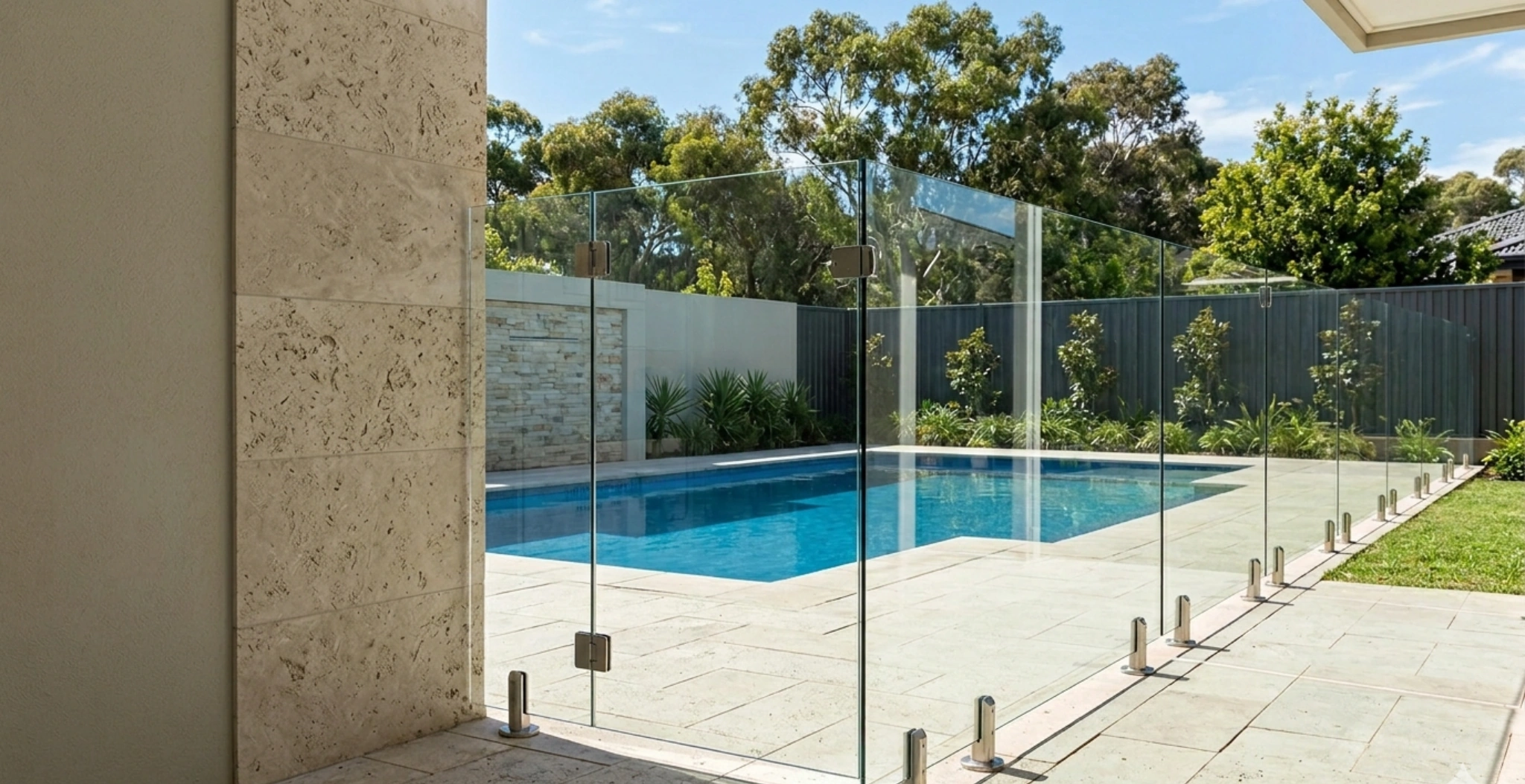
Glass pool fencing in Sydney’s coastal and exposed suburbs is subjected to far harsher conditions than the same system installed in a sheltered inland backyard. Salt in the air, full sun, wind pressure and ongoing moisture exposure all place additional strain on both the glass and its supporting hardware. Understanding these conditions is important because they affect not only how the fence looks over time but also how often it needs to be cleaned, checked and maintained.
Even when high-quality toughened glass and marine-grade fittings are used, coastal microclimates can still shorten the service life of the fence if regular maintenance is neglected. Properties in Bondi, Cronulla, Manly and other exposed suburbs often experience heavier salt loading than more protected locations. Factors such as elevation, distance from the surf, wind direction and whether nearby buildings or vegetation provide some shelter all influence how quickly deterioration occurs.
In coastal areas, microscopic salt particles carried by the air settle on glass panels, spigots, hinges, latches and base plates. When this salt combines with moisture from sea spray, humidity or rain, it creates the ideal conditions for corrosion and staining to develop.
On the glass itself, this often appears as a hazy film, water spotting or mineral residue that becomes harder to remove the longer it is left in place. On stainless steel components, salt deposits can contribute to tea staining, surface discolouration and pitting corrosion, even when quality materials have been used. If these deposits are allowed to sit for extended periods, deterioration can progress from being cosmetic to affecting the performance of the hardware.
Properties that face prevailing sea breezes or sit high above the coastline usually receive greater salt exposure than homes in more protected pockets. Fences on the windward side of a property often deteriorate faster than those enclosed within courtyards or shielded by walls and landscaping.
Strong UV exposure affects the non-glass parts of the fence more than the glass panels themselves. Rubber packers, plastic caps, sealants, lubricants within hinges and some finishes can dry out, become brittle or degrade over time when exposed to full sun day after day.
Wind is another major factor in exposed coastal and elevated suburbs. Large frameless glass panels can act like sails when gusts hit them, placing additional pressure on spigots, posts, anchors and gate hardware. Over time, this can:
This kind of ongoing stress can eventually lead to rattling panels, gate misalignment or a noticeable reduction in the fence’s stability if maintenance is not kept up.
Coastal and high-exposure sites also tend to collect more airborne contaminants. Sand, dust, pollen and pollution from traffic or nearby building work can cling to salt deposits on the glass and create a fine abrasive layer across the surface.
As rain, splashed pool water or condensation dries on these surfaces, mineral deposits can build up and gradually dull the clarity of the glass. If the panels are then wiped aggressively with rough cloths or unsuitable tools, those fine particles can scratch the surface. On metal fittings, the combination of salt and grime traps moisture against the hardware, which encourages corrosion to continue.
Regular cleaning is one of the most important parts of maintaining glass pool fencing in Sydney’s coastal and high-exposure suburbs. Salt residue, airborne grime and mineral deposits build up much faster in these environments, and if they are not removed regularly they can reduce clarity, stain hardware and shorten the life of the fence.
Cleaning does not need to be complicated, but it does need to be done properly. The goal is to remove salt and dirt before they become stubborn without scratching the glass, damaging fittings or interfering with the fence’s safe operation.
Harsh chemicals and abrasive tools can do more harm than good. For most coastal glass pool fences, a gentle cleaning approach is both safer and more effective.
A simple maintenance kit should include:
Standard glass cleaners are generally suitable if they are non-abrasive and ammonia-free. Products containing hydrofluoric acid, strong alkalis, abrasive creams, steel wool or scourers should never be used, as they can mark the glass and damage nearby fittings.
In exposed areas, cleaning frequency matters more than scrubbing harder. Regular light cleaning removes salt before it bonds to the surface and reduces the risk of staining or etching.
A practical routine involves:
High-pressure washers are best avoided unless the system manufacturer specifically allows their use. Excessive pressure can force water into places it should not go, disturb seals or affect fixings over time.
In many exposed coastal suburbs, a fortnightly clean is a realistic minimum. In absolute beachfront or heavily exposed locations, weekly cleaning may be more effective than allowing salt and mineral build-up to become difficult to remove.
It is important not to use metal scrapers on glass to remove paint, bird droppings or mineral deposits. These areas should first be softened with warm soapy water and then gently wiped away. For stubborn mineral spotting, a glass-specific non-abrasive cleaner suitable for toughened glass may be used carefully and according to the manufacturer’s directions.
Strong chlorine, bleach and acidic cleaners should be kept away from stainless steel hardware wherever possible. These products can contribute to pitting, staining and long-term damage. After heavy pool chemical use, such as shock treatment, it is wise to rinse nearby panels and fittings with fresh water to reduce the risk of chemical residue lingering on surfaces.
In Sydney’s coastal and high-exposure suburbs, stainless steel hardware is under constant pressure from salt, moisture and sun. Spigots, hinges, latches, brackets and fixings need to do more than look good. They must continue to perform safely over time in conditions that actively encourage corrosion.
Preventing corrosion comes down to a combination of correct material selection, proper installation, routine rinsing and early treatment of surface staining before it develops into something more serious.
For pool fences near the coast, 316 marine-grade stainless steel is generally preferred over 304 because it offers better resistance to corrosion in salt-heavy environments. In especially harsh waterfront locations, even higher-grade materials or additional protective finishes may be worth considering.
The finish also matters. Smooth polished or well-brushed surfaces are generally easier to keep clean and less likely to trap contaminants than rougher finishes. Components should be cleanly finished without grinding marks, crevices or unnecessary edges where salt and moisture can collect. Mixed metals should also be avoided where possible, as contact between incompatible materials can increase the risk of galvanic corrosion.
Good design and careful installation are just as important as material selection. Spigots and base plates should be detailed so water can drain away rather than pooling around the base. Core-drilled systems and channel systems need correct grouting, drainage paths and weep points to prevent moisture becoming trapped around buried stainless steel sections.
All fixings should be of an appropriate corrosion-resistant standard, not just the visible hardware. Inferior screws or bolts can fail early and stain surrounding components. Gate hinges and latches also need to be aligned correctly so they do not bind, drag or wear unevenly, as this can damage protective finishes and shorten the life of the hardware.
Glass pool fencing in coastal Sydney needs a regular maintenance routine to cope with the harsher conditions found in exposed environments. Salt spray, UV exposure, strong winds, debris and pool chemicals all contribute to faster wear, which means a consistent maintenance rhythm is essential. A well-maintained fence is not only more attractive but also far more likely to remain safe and compliant.
How often the fence should be cleaned and checked depends on how exposed the property is, how close it is to the ocean and how heavily the pool area is used. A sheltered suburban pool will usually need less frequent attention than a fence on a headland, beachfront or elevated coastal site.
A visual inspection should be carried out at least once a month in coastal areas, with extra checks after storms, strong winds or any impact around the fence.
Each inspection should include:
Any safety-related issue, such as a loose panel or a gate that no longer self-closes reliably, should be dealt with straight away rather than left for the next scheduled clean or service.
Cleaning schedules in high-exposure locations need to reflect the conditions rather than follow a generic recommendation.
As a general guide:
Fresh-water rinsing is especially important for properties very close to the ocean, where salt deposits can accumulate almost daily.
Glass pool fencing in high-exposure areas can deteriorate gradually, so early warning signs should never be ignored. A fence does not need to look severely damaged before it starts to lose strength, reliability or compliance.
Regular checks and a simple hands-on assessment are often enough to identify issues before they become more serious. If the fence feels less stable, the gate stops operating smoothly or the hardware begins to show obvious deterioration, professional attention is usually needed.
Movement is one of the clearest signs that something is wrong. A compliant glass pool fence should feel solid and stable.
Warning signs include:
Loose spigots can indicate corroded fixings, failed grout, substrate movement or a combination of these issues. In coastal environments, moisture intrusion and salt can accelerate this process. Any noticeable movement should be treated seriously, as it affects the fence’s ability to withstand impact and wind loading.
Stainless steel fittings are durable, but they are not immune to harsh coastal conditions. Hardware should be checked for:
Surface staining can sometimes be cleaned and managed, but repeated staining often points to a more persistent issue, such as unsuitable material grade, trapped moisture or an installation detail that is holding contaminants against the surface.
Cracks in hinges, latches or clamps, especially around screw holes or stress points, are a serious warning sign. Fatigued hardware can fail suddenly and should not be left in service.
Owner maintenance plays an important role in keeping a glass pool fence in good condition, but there are limits to what should be handled without specialist help. In Sydney’s coastal and high-exposure suburbs, professional servicing is often the safest and most cost-effective way to address problems before they become major repairs.
This is particularly true where salt, UV and wind have affected structural fittings or where moving components such as hinges and latches are no longer operating as they should.
A professional inspection is recommended whenever there are signs that the strength, alignment or stability of the fence may be affected.
This includes cases where:
Problems like these may indicate corrosion below the surface, loosening anchors or movement in the substrate. Even when the visible issue appears minor, the underlying cause may be more serious.
Salt, sand and sun can all reduce the service life of moving hardware. Professional servicing is usually the best option when self-closing gates stop latching properly, hinges become stiff or noisy or magnetic and soft-close systems stop functioning reliably.
Incorrect lubrication or forcing seized hardware can make the problem worse. A technician can determine whether cleaning and adjustment are enough, or whether the hardware has reached the point where replacement is the safer option.
Professional review is also worthwhile after major storms, strong wind events or building work near the fence. Even if the glass appears intact, impacts from branches, outdoor furniture or construction activity can stress fittings and affect alignment.
Changes to paving, decking, drainage or landscaping can also create new issues. They may alter support around fixings, interfere with water run-off or create climbable points that affect compliance. If recurring problems keep returning despite regular cleaning and upkeep, professional advice is often needed to determine whether the fence requires upgraded hardware or a different maintenance strategy better suited to the site.
Maintaining glass pool fencing in Sydney’s coastal and high-exposure areas is not just about keeping it looking clean. It is about preserving safety, compliance and long-term performance in conditions that place constant pressure on glass and hardware. Salt, wind, UV exposure, moisture and pool chemicals all affect materials over time, particularly when the fence is close to the ocean or fully exposed to the elements.
With regular rinsing, appropriate cleaning methods, prompt attention to corrosion and a clear inspection routine, many common problems can be managed before they turn into major repairs. At the same time, professional servicing remains an important part of caring for glass pool fencing in harsh environments, particularly when movement, corrosion or gate performance becomes a concern. A proactive maintenance plan helps keep the fence safe, clear and structurally sound while protecting the overall appearance and value of the pool area.

