


How Long Does It Take to Install a Pool Fence?
September 16, 2026
Planning a new pool fence often starts with one practical question: how long will installation take? The timeframe can affect when a pool is ready to use, how long other work around the backyard may be disrupted and when landscaping or construction can be completed. For properties considering pool fencing in Sydney, the installation period can vary on the fence type, pool layout, site access, ground conditions and compliance requirements.
Poolsafe Fencing can assess these factors during the planning and measuring stage to establish a realistic installation timeframe. Many straightforward residential fences can be completed within a day, while custom designs, difficult access or additional site work can extend the schedule. Knowing what can affect the timeline helps coordinate other work and reduce avoidable delays.
From material lead times and site preparation to installation and final safety checks, several stages can influence when a pool fence is ready for use. Planning these steps allows the project to progress more efficiently while ensuring the finished barrier is secure and compliant.
Many standard residential pool fence installations can be completed within a day, although the actual on-site timeframe varies depending on the project. A straightforward pool area with clear access and a simple fence layout will take less time than a larger or more complex installation.
Glass, aluminium and other pool fencing systems can have different installation requirements. Multiple gates, corners, sloping ground and custom sections can also add time. Larger projects or installations requiring additional site preparation may take two days or longer.
The physical installation is only one part of the overall project schedule. Material lead times, site preparation, approvals and weather can affect when work can begin, even when the on-site installation itself is expected to take only a day.
Yes, the type of pool fencing can affect installation time. Different systems have different fixing methods and installation requirements. Frameless and semi-frameless glass can require more precise installation than aluminium or tubular fencing, while removable mesh may be quicker to install on a straightforward site.
Comparing glass and aluminium pool fencing can help property owners understand how each material differs in appearance, maintenance, installation requirements and overall cost.
The design can also influence the timeframe. Curved sections, multiple gates, changes in level and custom sections may require additional measuring and adjustment. A simple aluminium fence may take less time to install than a customised glass fence covering a similar area.
Fence type is only one factor affecting the schedule. The size and layout of the barrier, site access and condition of the installation area can also influence how long the work takes.
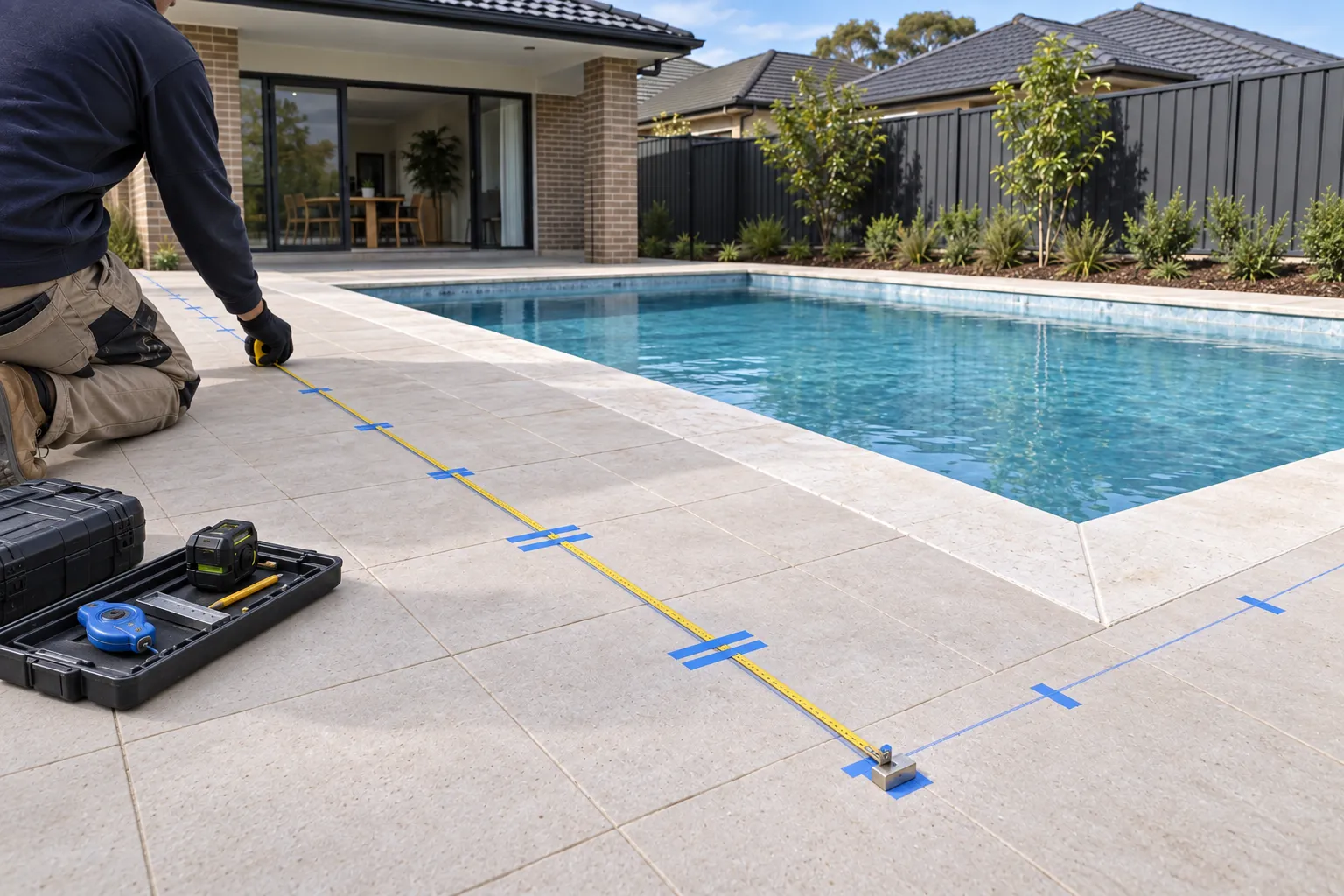
The size and scope of a pool fence installation depend on the required barrier layout rather than the size of the pool alone. The fence perimeter, number of gates, shape of the pool area and existing structures can all affect the amount of fencing and installation work required.
Understanding the measurements required before installing glass pool fencing can help identify issues involving finished levels, gate clearances, panel sizes and fixing points before materials are ordered.
The pool dimensions help determine the required fence length, but the barrier does not always follow the exact edge of the pool. The surrounding layout can result in a longer or more complex fence line, requiring additional panels, posts and fixing points.
The number of gates and separate fence sections can increase the overall scope. Each gate requires additional hardware and alignment, while multiple sections, corners and changes in direction can require more measuring and installation work.
Curves, angles and changes in direction can make the fence layout more complex than a series of straight runs. Existing boundary fences, walls, retaining structures and pool equipment can also influence where the barrier can be positioned.
Assessing these factors during the measuring and planning stage helps determine the required materials, fence layout and installation approach before work begins.
Yes, a pool fence can be installed around an existing pool, provided the surrounding area can accommodate a compliant and secure barrier. Retrofitting is common when an older pool needs a new fence, an existing barrier needs replacement or the pool area is being updated.
The surrounding surface and layout can affect how the fence is positioned and installed. Existing concrete, paving, decking, retaining walls, landscaping and boundary fences may influence the available fence line and fixing points. These areas need to be assessed to determine whether they are suitable for the selected fencing system or require preparation or modification.
A site assessment can also identify whether parts of an existing barrier can be retained. Checking the fence line, gate positions and existing structures before installation helps establish the required work and reduces the risk of unexpected changes or delays.
Site conditions can affect how long a pool fence installation takes. Flat, accessible areas with suitable fixing surfaces are quicker to work on, while uneven ground, difficult access and existing obstacles can require additional preparation.
Preparing the area before installation can also help keep the project on schedule. Clearing furniture, toys and other obstacles, confirming the fence layout and completing relevant site work beforehand can reduce interruptions once installation begins.
Flat concrete or paving can generally be quicker to work on than soil, lawn or uneven ground. Rocky or difficult ground may require additional excavation or drilling, while sloping areas may require adjustments to posts and fence sections to maintain the required barrier height and gaps.
Narrow access, stairs, sheds, pool equipment, retaining walls and established landscaping can make it harder to bring materials and equipment into the pool area or maintain a straightforward fence line. Clearing the installation area and addressing obstacles before work begins can help minimise delays.
Property owners can help keep pool fence installation on schedule by preparing the site before the installation date. The pool area should be clear, accessible and ready for the agreed fence layout, with nearby construction, paving, decking or landscaping work completed where it affects the fence line.
Before installation begins, property owners should:
Where digging, drilling or new footings are required, obtaining underground utility plans can help identify registered services that may affect the proposed fence line or installation method.
Preparing these areas in advance allows the installer to work without unnecessary interruptions and reduces the risk of changes affecting the expected timeframe.
Yes, a pool fence installation may require council approval or other regulatory requirements, depending on the property, existing pool, proposed fence and work being carried out. In NSW, pool barriers must meet applicable pool safety and building requirements, but the process can differ between a new installation, replacement fence and changes to an existing barrier.
Some fencing work may qualify as exempt development, but it must satisfy the applicable NSW exempt development requirements and relevant building standards.
Approval requirements should be checked before installation is booked, particularly where the fence layout, boundary structures, retaining walls or other parts of the pool area are being changed. If documentation, applications or inspections are required, these may need to be completed before installation can proceed.
The approval process can affect the overall project timeframe even when the physical fence installation only takes a day. Confirming the requirements and finalising the fence layout early can help prevent delays, design changes or modifications after installation.
Several factors can delay a pool fence installation, including an unprepared site, difficult access, design changes, material availability and poor weather. Addressing these issues before the scheduled installation date can help keep the project on track.
Restricted access, uneven ground, existing structures and unfinished paving or landscaping can prevent installation from proceeding as planned. Last-minute changes to the fence line, gate positions or design may also require new measurements, materials or additional preparation.
Compliance issues involving existing boundary fences, retaining walls or other structures can create further delays if rectification work is needed before the barrier can be completed.
Material availability can affect the installation date when custom panels, colours or specialised components are required. Weather can also delay outdoor work when rain, strong winds or other conditions make installation unsafe or unsuitable.
Installer availability may also affect the overall schedule during busy periods. Confirming the design, materials and site requirements early can reduce the risk of delays and help secure a suitable installation date.
A pool fence installation should ideally be booked several weeks before the desired installation date. Although a standard residential fence may only take a day to install, the overall process can include measuring, design confirmation, material ordering, fabrication and scheduling. Booking early allows time for these steps without putting unnecessary pressure on the project timeline.
Custom glass panels, bespoke gates, unusual layouts and special finishes may require additional time for fabrication and delivery. Earlier booking can also be useful during busy periods when installer availability is limited.
The installation should be coordinated with paving, decking, landscaping and other work around the pool. Confirming the fence layout and requirements early allows these works to be completed in the correct order and reduces the risk of changes later.
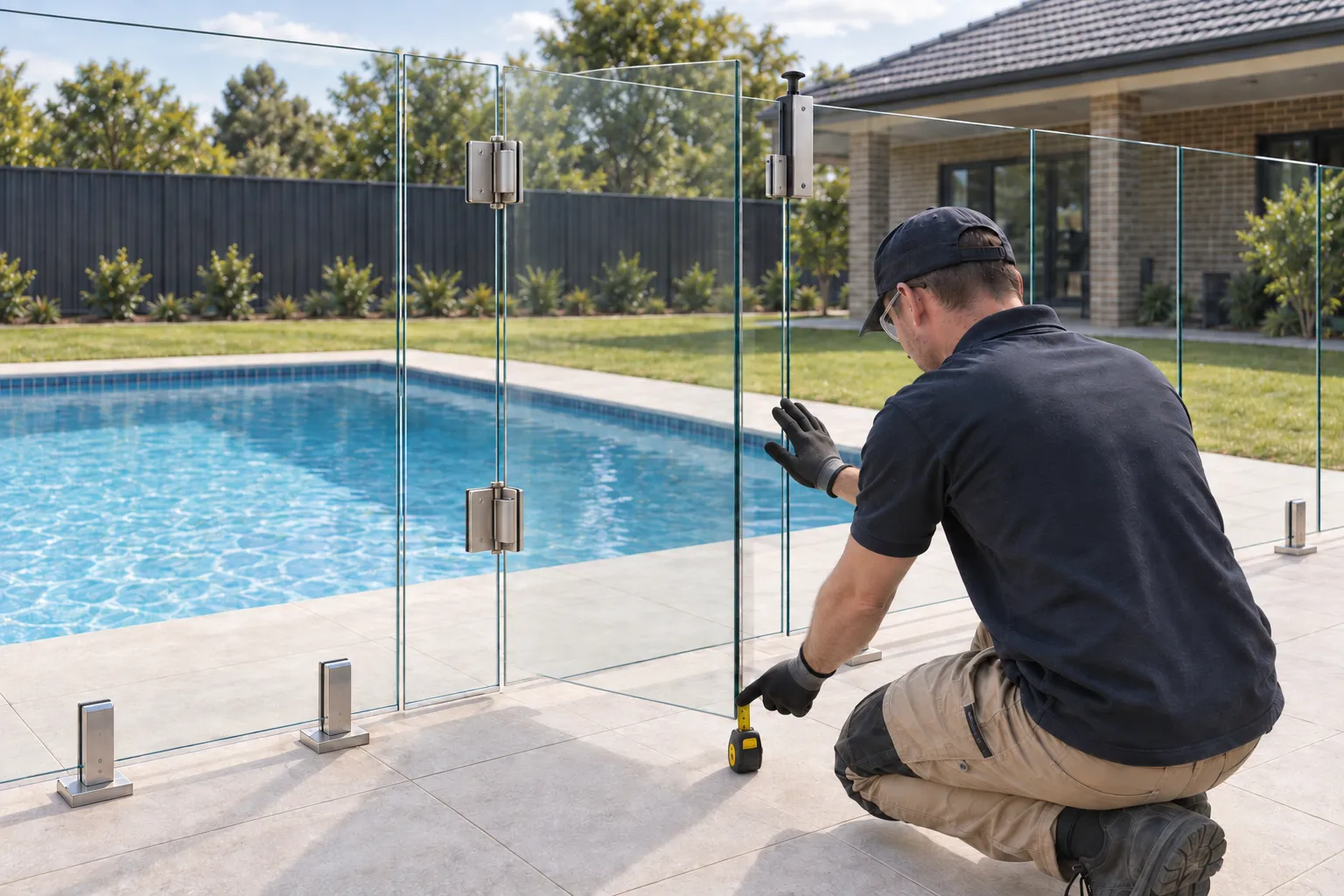
After the pool fence is installed, the fence and gates should be checked to ensure everything is secure, aligned and operating correctly. Any issues with the fence line, fixings or gate operation should be addressed before the installation is considered complete.
The installer can check the panels, posts, fixings and gates for stability and correct operation. Any required adjustments should be completed before the installation is finished.
The completed barrier may need to be assessed against applicable pool safety requirements, depending on the property and circumstances. This can include checking fence height, gaps, gate operation and surrounding features that could affect compliance. Where a formal inspection or certification is required, it should be arranged as part of the project.
Once the fence is ready for use, the gate should remain unobstructed and should not be propped open. Regular checks of hinges, latches, fixings and panels can help identify wear or damage early. Furniture, toys and other climbable objects should also be kept away from the barrier.
Addressing damaged panels, loose fixings or faulty gate mechanisms promptly helps keep the barrier secure and functioning as intended.
The time required to install a pool fence depends on factors such as the fence design, site conditions, access, preparation and any compliance requirements. A straightforward installation may take a day, while custom designs, difficult ground conditions or additional preparation can extend the timeframe. Planning the fence layout, approvals and surrounding work in advance can help avoid unnecessary delays.
Poolsafe Fencing can assist with the planning, design and installation process, helping identify site requirements and establish a realistic timeframe before work begins. With the right preparation, the installation can progress efficiently while ensuring the finished pool barrier is secure, compliant and built to perform reliably.

