


Sydney Pool Fencing Guide: Safety, Compliance and Renovation Tips
March 19, 2026
Pool owners face a unique mix of lifestyle benefits and legal responsibilities. With NSW pool safety regulations tightening in recent years, the way a pool is fenced is no longer just a design choice. It is a critical factor in protecting children, avoiding fines and ensuring a property can be sold or leased without delays. Poolsafe Fencing share practical insights drawn from day-to-day work so you can clearly understand which pool fencing rules apply to your home in Sydney, what safe, compliant fencing looks like and how to approach upgrades or renovations with confidence.
You will learn how current pool fencing laws and wider regulations affect an existing or planned pool, including key requirements for fence height, non-climbable zones, gates and latches. Installers also outline common compliance issues councils and certifiers identify, explain the process of bringing an older pool area up to standard and explore design options. By the end, pool owners will be better equipped to identify risks, discuss solutions with a licensed installer and invest in fencing that keeps their family safe, supports long-term property value and aligns with the way they want to use their outdoor space.
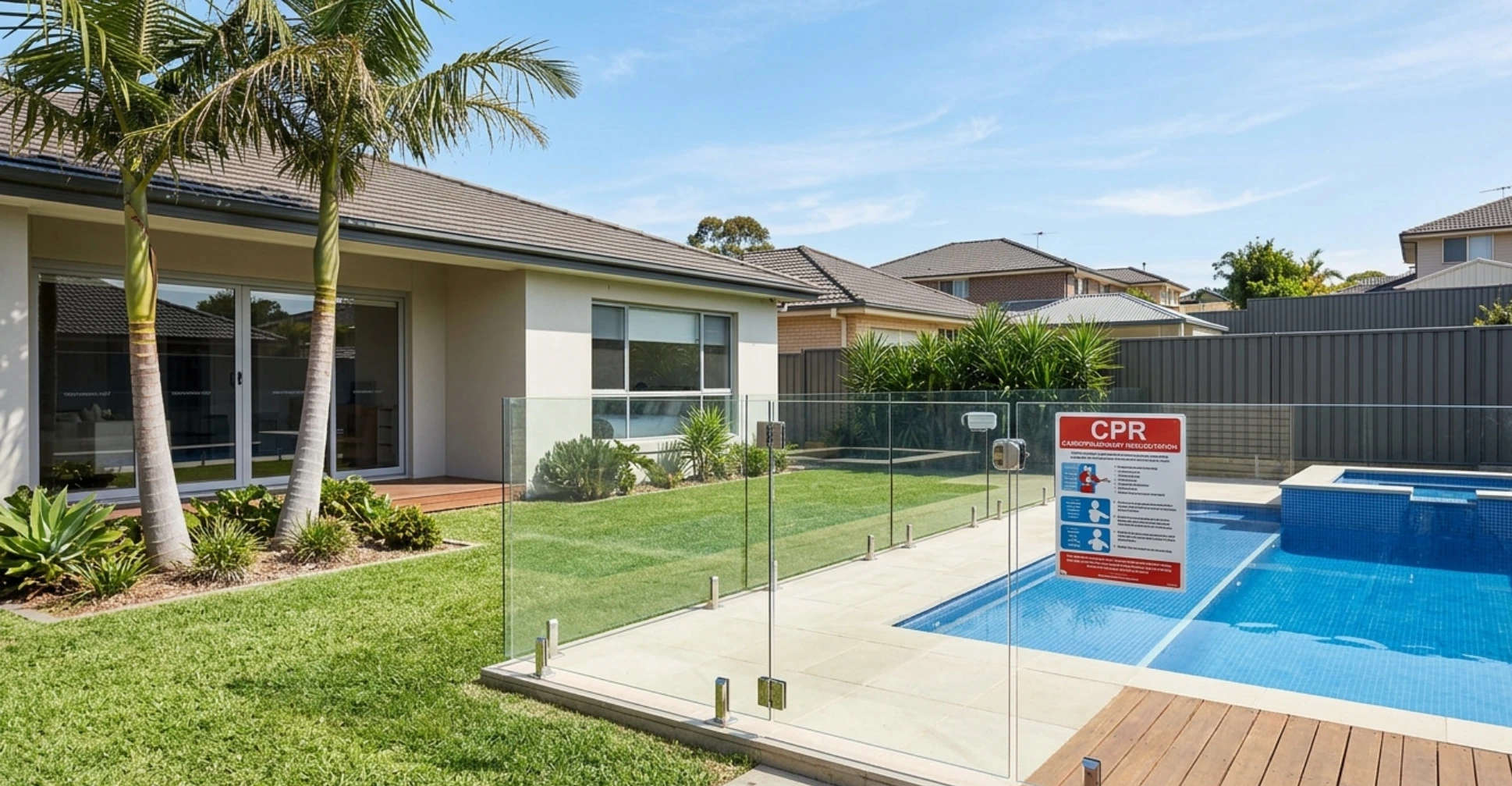
NSW pool fencing rules are very specific and most fines or failed inspections come from small details that are easy to miss. Anyone building, renovating or selling a property with a pool in Sydney needs to understand the NSW Swimming Pools Act and the Australian standard AS 1926.1, which sets the technical requirements for pool barriers.
Professional installers work with these rules every day, so this section focuses on what actually matters on site. The aim is to help owners recognise if their pool fence is likely to comply before an inspection and to highlight the common problems that need fixing.
AS 1926.1 sets out the technical requirements for pool barriers, including matters such as minimum heights, allowable gaps, non-climbable zones and gate operation. In NSW, pool compliance sits within the Swimming Pools Act 1992, the Swimming Pools Regulation 2018 and the applicable building code requirements, with some older pools still affected by earlier approvals or exemptions.
The standard specifies the minimum fence height, maximum gaps, climbable objects and how gates and latches must work. For most Sydney backyards, the key requirements are:
Because NSW pool compliance depends on both the current legal framework and the history of the pool, owners should not assume that one simple rule applies in every case. Older pools may have been approved under earlier requirements, but once a barrier is substantially altered, repaired or replaced, current compliance expectations often become relevant and should be checked before work begins.
Most non-compliance comes from climbable objects near otherwise good fences. AS 1926.1 requires a clear non-climbable zone of at least 900 mm on the outside of the pool barrier. This zone must be free of items that a young child could use as a ladder.
Common problems include garden benches, filter boxes, pot plants, BBQs, trees, lattice or horizontal rails close to the fence. In many older suburbs, retaining walls and boundary fences create complex level changes that affect how the 1.2 m height and 900 mm non-climbable zone are measured. Experts often need to adjust fence heights or relocate equipment to achieve compliance without major structural work.
Inside the pool area, climbable features that allow access over a low point in the fence can also be an issue. This can include raised garden beds or steps leading up to the barrier, so landscaping should always be planned with AS 1926.1 in mind.
NSW pool barriers generally require gates to be self-closing and self-latching so they return to the closed position without being manually secured. The latch must be at least 1.5 m above the finished ground or otherwise shielded so a small child cannot reach it.
Owners and occupiers are legally responsible for keeping the barrier in working order at all times. This includes regularly checking that:
Selling or leasing a property with a pool also brings specific legal requirements in NSW. For a sale, the contract will generally need to be supported by either a certificate of compliance, a relevant occupation certificate together with a certificate of registration, or in some cases a certificate of non-compliance. For a new lease, the requirements are stricter, and the property generally needs either a certificate of compliance or a relevant occupation certificate together with registration before the tenancy begins. Specialist installers and certifiers can help owners understand which rules apply to their property and what upgrades may be needed before an inspection, sale or lease.
Many pool owners are surprised when their fence fails inspection, even though it looks solid and well-built. In practice, most failures come down to a small number of recurring problems that conflict with NSW swimming pool barrier standards. Understanding these issues before booking an inspection can save time, reinspection fees and urgent last-minute repairs. Experts regularly see the same non-compliant details across older and newly renovated pools. The points below highlight what inspectors focus on and what pool owners can check themselves beforehand.
One of the most common reasons for failure is incorrect gaps or openings in the barrier. In most cases:
Ground movement, erosion or new paving can increase these gaps. For example, a fence that was once close to the ground may end up 120 mm above a subsiding garden bed, which is enough for a small child to crawl under.
Climbable objects in the non-climbable zone are another frequent cause of failure. The law generally requires a clear 900 mm horizontal zone on the outside of the fence, free of things a child can use as a step. Common problems include:
Fence height is also critical. For most pools, the barrier must be at least 1.2 m high, measured from the finished ground level. A build-up of mulch or garden soil next to the fence can effectively reduce the fence height below 1.2 m, which will not pass.
Where a house wall or boundary fence forms part of the pool barrier, there are extra rules that often trigger failures. Windows opening into the pool area may need to be permanently restricted to a maximum 100 mm opening or fitted with a compliant barrier solution. Some older pools were originally approved with doors or windows forming part of the barrier, but this is not accepted for current compliant arrangements. In practice, access to the pool should usually be through a compliant gate rather than a standard door from the house.
Boundary fences used as pool barriers must also meet specific height and climbability requirements. If the boundary fence forms part of the pool barrier, it will generally need to be at least 1.8 m high on the pool side. Attachments such as lattice, trellis, shelving or neighbouring structures can also create climbable points that cause the barrier to fail even if the original fence was compliant.
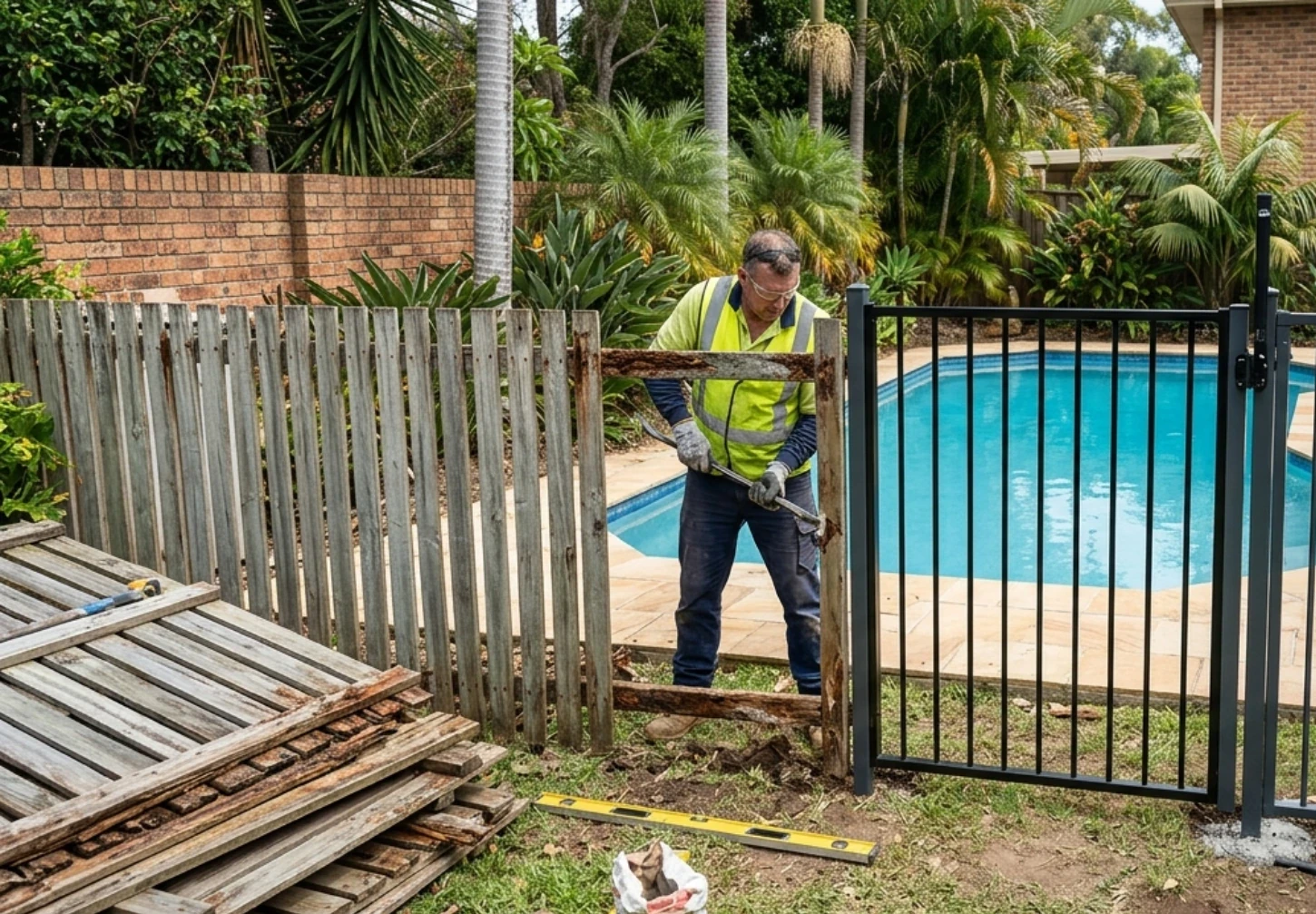
Older pool fences often fail current safety standards or start to deteriorate in the coastal climate. Renovation or full replacement is not only about looks, but it is also about complying with regulations and keeping children safe around water. Expert installers help homeowners assess what can be saved, what must be upgraded and how to plan work so the pool remains secure at every stage.
Before spending money on cosmetic improvements, it is vital to confirm that the existing fence layout, height and gate arrangement can actually be made compliant. In many cases, older fences need a mix of structural repairs, hardware upgrades and changes to the surrounding area to pass inspection.
A good starting point is a compliance check against the latest NSW pool safety legislation and relevant Australian standards. Clear signs a fence may be a candidate for full replacement include heavy rust on posts or rails, rotted timber, glass with cracks or edge damage, and posts that have loosened in the ground.
Repair or partial renovation may be realistic if:
For example, an older tubular fence might be worth keeping if the posts are still solid, but the panels are replaced to correct bar spacing and remove footholds, while the gates and latches are upgraded to self-closing models approved for pool use.
Many older Sydney pools were fenced to standards that no longer apply. Common problems include fences under 1.2 metres high, gaps under the fence that exceed 100 mm and climbable features within the 900 mm non‑climbable zone.
Timber fences, in particular, often fail because palings shrink or warp, creating gaps and footholds. Decorative features like lattice, wide rails or horizontal wires frequently create climbing points that must be removed or modified. Retaining walls or garden beds may have been added after the original fence, reducing fence height from the outside.
Upgrading also means reviewing gate operation. Gates must open away from the pool and self‑close from any open position with a latch at least 1.5 metres above finished ground. Replacing a tired gate with a modern frameless glass gate or a new aluminium gate set with quality hinges and latches is often the most effective single improvement.
If full replacement is required, experts work with clients to choose materials that perform well in Sydney conditions. Powder‑coated aluminium and frameless or semi‑frameless glass are popular because they resist corrosion and are relatively low maintenance compared to most timbers.
Renovation is also an opportunity to streamline the layout. Adjusting fence lines to create a more spacious pool zone, reducing awkward angles and separating pool fencing from general boundary fencing can improve both safety and appearance. During any works, the pool area must remain secure with temporary compliant barriers so there is no period where the pool is accessible.
Engaging a specialist installer who understands both design and regulation helps ensure the renovated or replaced fence not only looks modern but also passes council or private certifier inspection the first time.
Choosing the right pool fencing material in Sydney is about more than appearance. It needs to handle coastal salt air, summer heat, sudden storms and legal safety requirements while still looking good over time. Homeowners need to balance durability, maintenance, cost and style so the fence performs well in local conditions, not just on installation day.
The best material for one Sydney home may not suit another. Proximity to the coast, exposure to wind, the presence of young children and the style of the home all affect what will work well long term. The sections below outline how the main options perform in Sydney’s climate and what to consider before making a decision.
Frameless and semi-frameless glass is popular because it maximises views and suits modern homes. In a mix of coastal and suburban environments, glass performs well if the hardware is chosen carefully.
Glass itself is not affected by salt or UV, but the supporting components are. For coastal suburbs, professionals recommend high-grade stainless steel spigots or posts, usually 2205 duplex or at least 316 and quality glass clamps and fixings. Cheaper plated hardware can pit or corrode quickly in salt-laden air.
Maintenance is another key factor. In bushfire season and during summer winds, glass can collect dust, pollen and salt. Regular cleaning with mild detergent and a soft brush, usually every 4 to 8 weeks, depending on exposure, keeps panels clear and reduces staining. Hydrophobic nano coatings can be added to slow build-up, which is useful for waterfront or cliff-top homes.
Powder-coated aluminium is one of the most practical materials for family pools. It is relatively light, strong and highly resistant to corrosion, making it suited to inland and coastal suburbs. The powder coat finish protects the metal and is available in a wide range of colours to match Colorbond roofs or window frames.
For homes close to the ocean, marine-grade powder coating and regular hosing to remove salt, especially on fences facing prevailing sea breezes, are recommended. Palings and rails should be designed to comply with NCC and standards so there are no climbable horizontal sections in the non-climbable zone.
Steel can still be used, but in Sydney’s coastal conditions, it should be hot-dip galvanised and then powder-coated. Without both layers, rust can develop quickly, particularly at welds and cut edges. Aluminium usually gives a better long-term result in most suburban pools with lower maintenance.
Timber looks warm and natural and can provide privacy around a pool. However, in humid summers and strong UV, it usually requires frequent staining or painting. Boards can also warp or split over time, which may create gaps wider than 100 mm and lead to non-compliance. For that reason, timber is often better used as a decorative or privacy screen, with a compliant aluminium or glass barrier serving as the primary pool fence.
When choosing materials, owners should consider:
By weighing these factors alongside local climate exposure, owners can choose glass, aluminium or a combination system that keeps the pool area practical, compliant and visually consistent with the home.
Pool fencing renovation costs vary because every backyard, council area and existing fence is different. Homeowners looking into pricing should understand which factors they can control and which are shaped by safety regulations and site conditions.
Accurate budgeting starts with assessing the type of work required, the condition of the existing fence and the level of finish desired before any quote is finalised.
The biggest cost driver is whether the project is a minor compliance upgrade or a full replacement. If the existing fence is structurally sound and roughly in the right position, small changes are usually far cheaper than starting again.
Lower-cost work might include adjusting gate latches and hinges, raising or lowering fence panels, installing new boundary spacers to close gaps or replacing short sections that fail the 1.2 m height or climbable zone rules. These tasks are often measured in hours rather than days.
Costs rise when large sections of fence do not meet current legislation or are badly corroded or rotted. Removing an entire outdated fence and installing a new compliant glass, aluminium or steel one will involve demolition, disposal and full new materials, which increases the total spend.
Conditions on-site in the suburbs strongly influence labour time. Simple flat yards with clear access for vehicles and materials are quicker and more affordable to work on. Sloping or stepped sites, tight side access or steep driveways increase manual handling and setup time.
Renovations around existing landscaping also affect cost. Working around paved areas, gardens, decks or retaining walls can limit fixing points or require custom core drilling and specialised posts, which are more complex than standard flanged posts on new concrete. Existing fence removal and disposal is another variable. Old concrete footings, rusted steel set deep in rock or asbestos-containing materials in very old boundary structures will all need careful and often more expensive handling.
Creating a safe, compliant and attractive pool area is never about ticking just one box; it’s about balancing responsibility, regulation and lifestyle. Throughout this guide, the focus has been on helping you understand why pool fencing laws exist, what the key compliance requirements are and how to navigate inspections, certifications and ongoing maintenance. It has also covered the practical design and renovation considerations that influence the choice of materials, fence layout, gates, latches and surrounds so that safety never comes at the expense of how your outdoor space looks and functions. By approaching your pool fence as a long‑term investment, you can make smarter decisions, avoid costly compliance issues and enjoy your pool with peace of mind.

