


Can a Boundary Fence Be Used as a Pool Fence in NSW?
June 12, 2026
When planning a new pool or upgrading an existing pool barrier, one of the most common questions is whether an existing boundary fence can form part of the enclosure. Using a boundary fence can reduce the amount of additional fencing required and make better use of the available space, particularly in smaller backyards. However, a standard dividing fence does not automatically meet the requirements for a compliant pool barrier.
NSW pool-safety rules impose specific requirements for fence height, gaps, non-climbable zones, structural condition and the surrounding layout. Landscaping, retaining walls, raised surfaces and nearby objects can also affect compliance, even where the fence itself appears suitable.
Poolsafe Fencing can assess whether an existing boundary fence is suitable for a new or upgraded pool enclosure and help property owners plan a barrier that works as one continuous system. This article focuses primarily on boundary fences incorporated into new pool-barrier layouts or substantial upgrades. The requirements applying to an older existing pool can vary depending on when the pool was installed, the property and any applicable exemptions. A council or private certifier should confirm the requirements for the individual site before work begins.
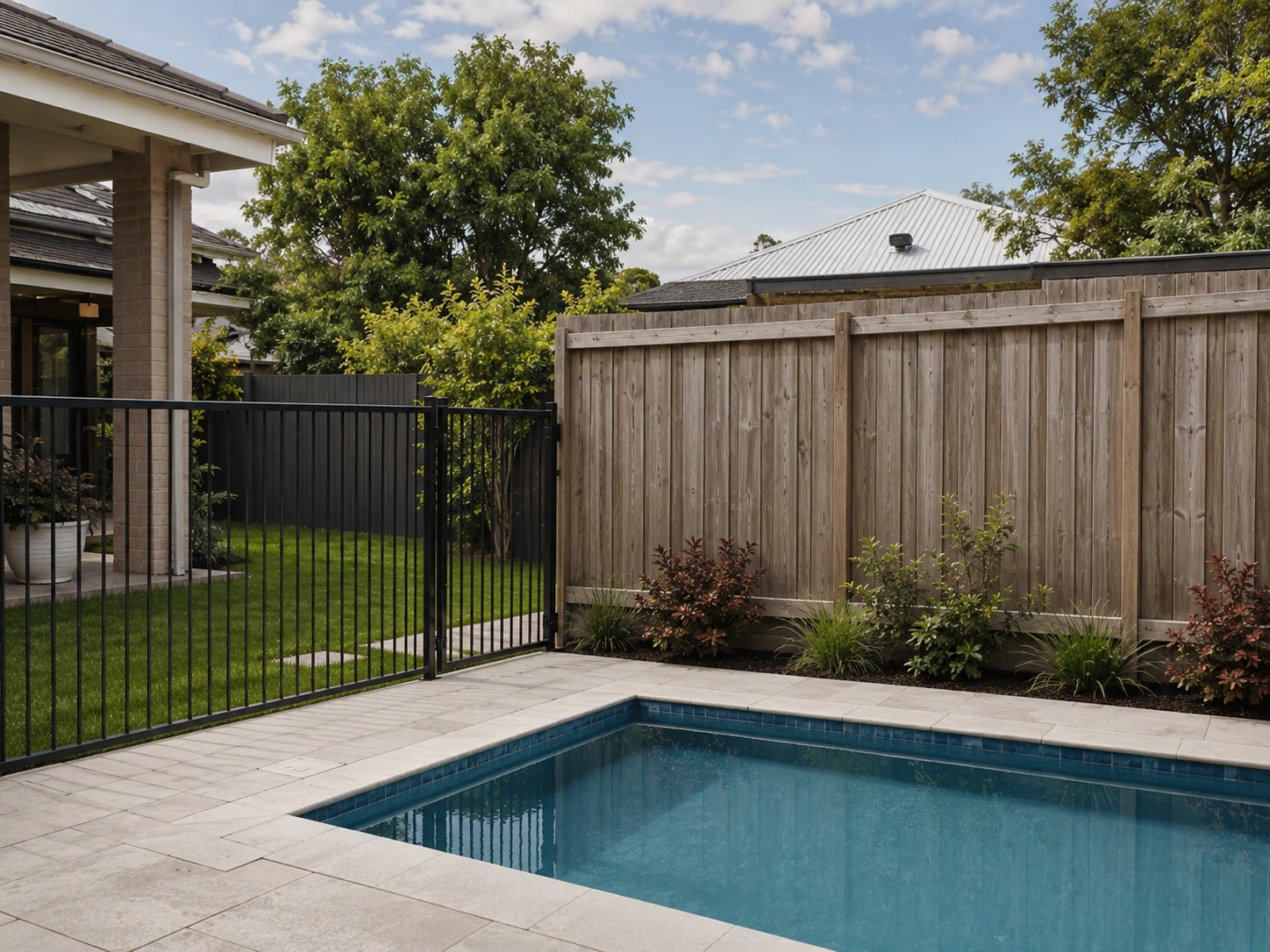
A boundary fence can legally form part of a pool barrier in NSW, but only if it satisfies the applicable safety requirements. It is not enough for the fence to sit along the property line. The fence must be high enough, structurally sound and free from openings or climbable features that could allow a young child to enter the pool area.
Where a boundary fence is incorporated into the enclosure, it must work together with the internal pool-fencing sections, gates and adjoining structures to create a continuous barrier. A single weak point can result in a failed inspection and require changes after the rest of the pool area has already been completed.
The fence should also be assessed early in the planning process. An existing dividing fence that is adequate for privacy may still require repairs, additional height or a different pool-fencing layout before it can be relied on as a safety barrier.
Fence height is one of the first issues to check when deciding whether a boundary fence can be incorporated into the pool enclosure. NSW Government guidance states that an internal pool fence must generally be at least 1.2 metres high. Where a boundary fence forms part of the pool barrier, it must generally be at least 1.8 metres high.
The required height is not simply the advertised or manufactured height of the fence panel. For a boundary fence used as a pool barrier, the effective height should be checked from the finished ground level on the pool side to the top of the barrier.
The entire section must maintain the required height. A fence may be nominally 1.8 metres high but still create problems where landscaping, paving, decking or raised garden beds have reduced the effective height at particular points.
Inspectors may check multiple locations along the fence line rather than measuring only one representative section. Uneven ground, localised rises and changes in surface level should therefore be considered before new landscaping or paving is completed.
A boundary fence must also maintain the required non-climbable zone on the pool side. This zone is assessed from the top of the barrier and is intended to prevent a child from using rails, projections, landscaping or nearby objects to climb over the fence. Sutherland Shire Council explains that the non-climbable zone for boundary fences is located on the pool side and extends 900 mm from the top and outwards from the barrier.
Potential issues include:
Where climbable features cannot be removed or modified, installing a separate internal pool fence set in from the boundary may be a more practical solution.
A boundary fence can appear tall and solid while still containing gaps that affect compliance. Openings should be checked beneath the fence, between individual panels and anywhere the fence meets another structure.
NSW Government guidance states that a pool barrier must not leave a gap at the bottom greater than 10 cm and that gaps between vertical bars must not exceed 10 cm.
The gap between the bottom of the barrier and the finished ground level should be checked along the entire fence line. Common problem areas include:
Repairs may involve adjusting the ground level, installing an appropriate plinth or modifying the lower section of the barrier.
Older timber fences can develop gaps as palings warp, shrink or move over time. Metal panels can also loosen or bend, particularly where posts have shifted.
Pay particular attention to the connection points where a boundary fence meets a house wall, shed, retaining wall or another fence. Narrow triangular gaps and irregular spaces are easy to overlook but may still create an access point.
Any gap close to the allowable limit should be measured rather than judged by eye.
The area around a boundary fence can be just as important as the fence itself. A barrier that initially complies may no longer be effective after landscaping, paving or outdoor features are added.
Raised garden beds, sleepers, planter boxes, bench seats, pool-equipment platforms and retaining walls can reduce the effective height of the barrier or provide a climbing opportunity. Features close to the fence require particular attention, especially where they create an accessible step-up point on the pool side.
Movable objects should also be considered. Keep the area clear of items such as:
The NSW Government notes that trees, shrubs and objects such as barbeques, pot plants, toys, ladders and chairs should not be placed within the non-climbable zone.
Fixed features such as air-conditioning units, taps and meter boxes can also affect the layout if they are positioned close enough to be used as a foothold.
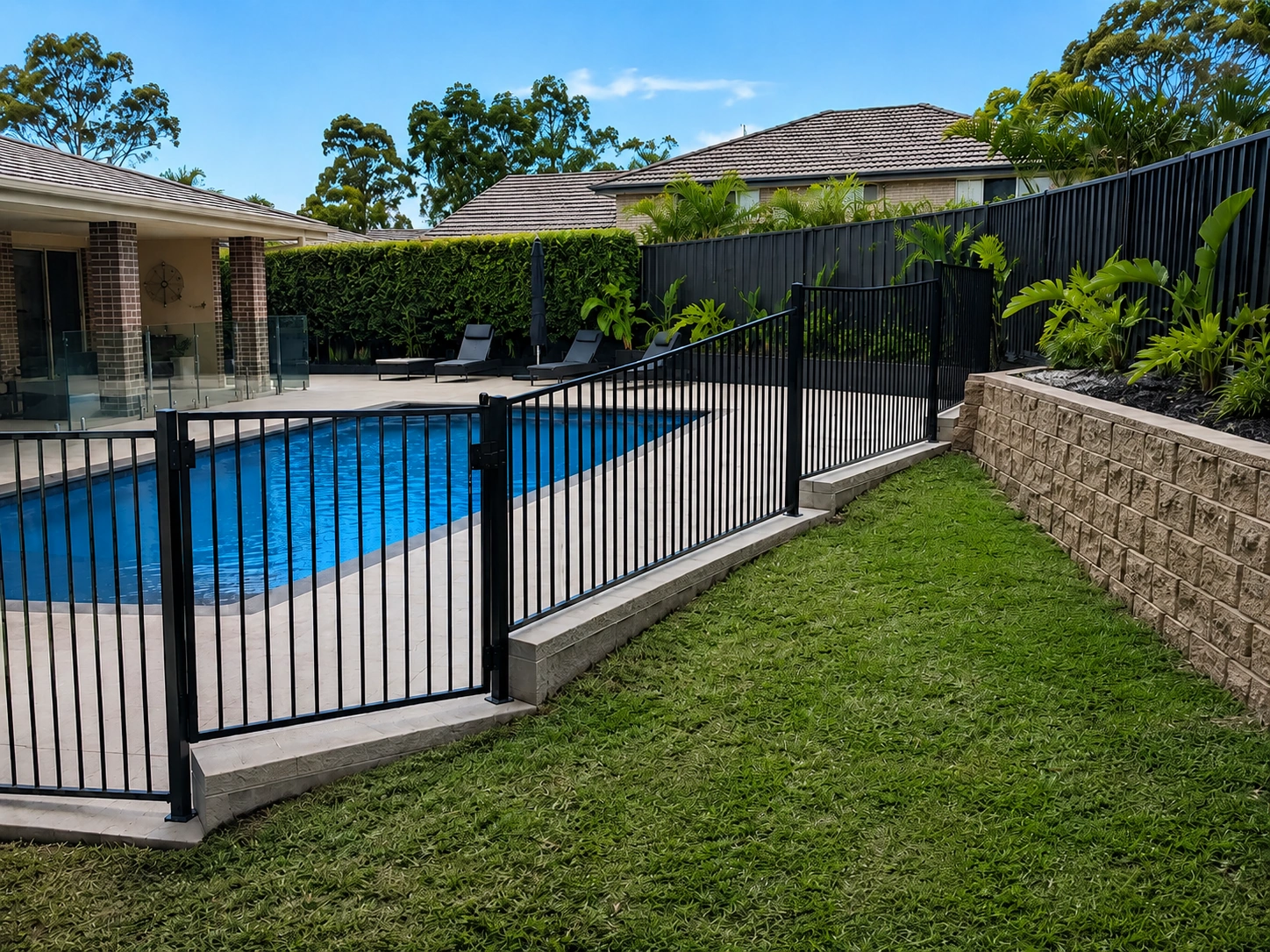
Retaining walls and sloping blocks often make boundary-fence planning more complicated. A fence that appears high enough from one position may fall short of the effective-height requirement where the ground rises or a nearby structure creates a step-up point.
A retaining wall near a boundary fence can affect both the measured height and the non-climbable zone. This is particularly important where a child could stand on the wall, garden bed or adjoining surface and gain additional height.
Possible solutions may include:
These decisions should be made before paving and landscaping are finalised. Rectifying a non-compliant layout after the surrounding surfaces have been completed can add unnecessary cost and disruption.
On a sloping or tiered block, the safest approach is often to treat the boundary fence as only one part of the barrier system rather than assuming it can be relied on along its entire length.
Changes in levels should be mapped out before installation begins. This makes it easier to identify where additional panels, stepped sections, retaining-wall modifications or an internal fence may be required.
Before an existing boundary fence can be incorporated into a pool barrier, it needs to be structurally sound and in good repair. A fence that is adequate as a dividing fence may still be unsuitable as a safety barrier.
Common issues include:
The fence should be stable, rigid and properly fixed. Loose panels or palings may need to be re-secured or replaced. Deteriorated posts may require replacement and appropriate footing work.
Suitable materials can include timber palings, metal panels and masonry walls, but compliance depends on the way the barrier is constructed and maintained. The material alone does not determine whether the fence is suitable.
Ongoing maintenance is also important. A compliant barrier can become unsafe over time as panels loosen, landscaping grows or new objects are placed nearby.
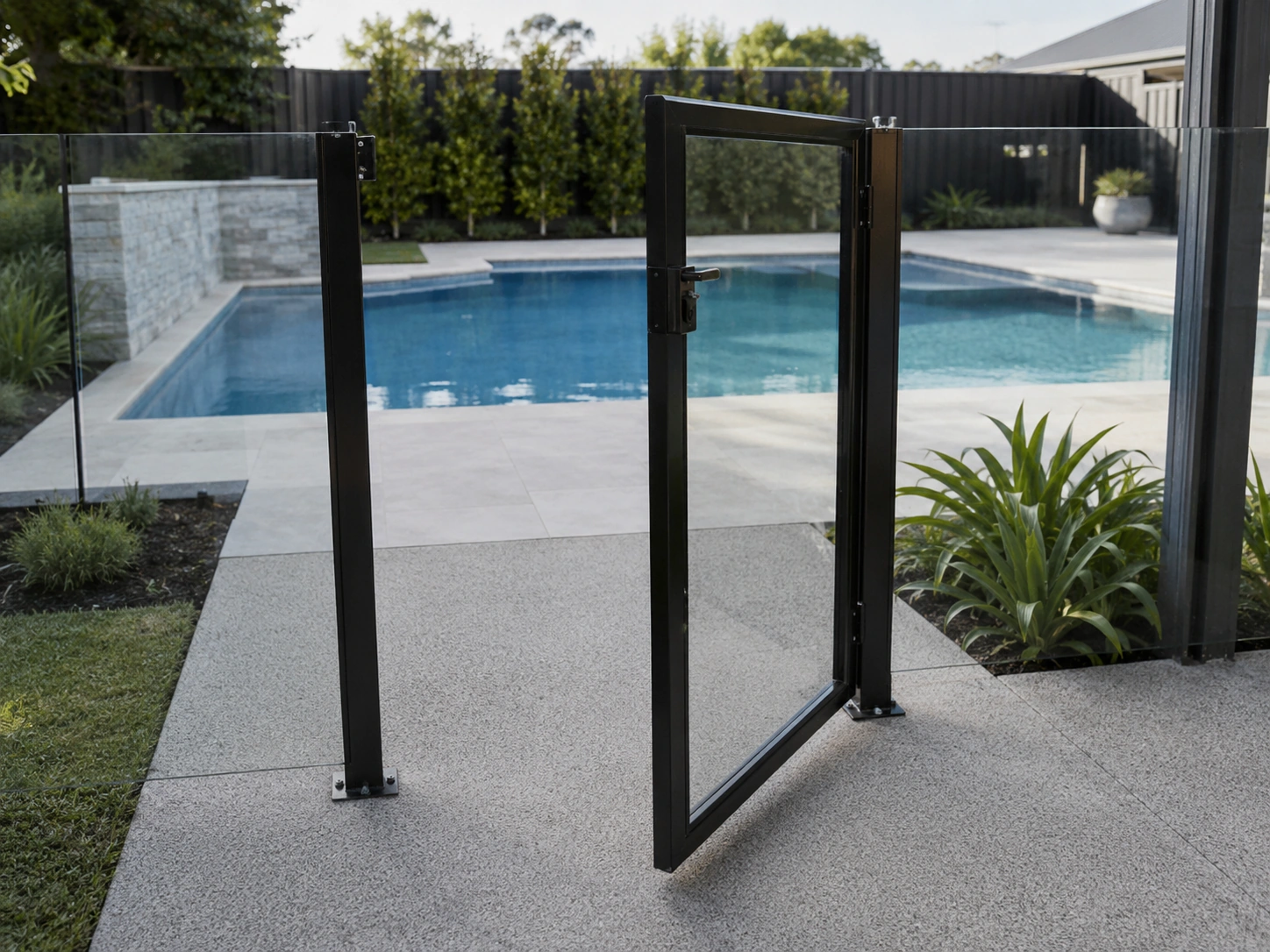
A boundary fence used as part of the pool barrier should not contain a gate that provides access from an adjoining property or another area outside the enclosure. Sutherland Shire Council’s pool-safety guidance states that gates within a boundary fence are not acceptable.
Any required pool-access gate should be incorporated into the internal pool-fencing layout. Pool gates must open outwards, away from the pool area, and remain self-closing and self-latching. Northern Beaches Council also notes that gate latches must generally be positioned 1.5 metres above ground level or protected by an appropriate shield.
The gate location should be planned carefully to ensure that:
Before posts are fixed in concrete or panels are cut to size, the complete barrier layout should be marked out and checked on site.
Include:
Finished ground levels are particularly important. If paving or landscaping is planned but not yet complete, the proposed levels should be accurately allowed for before the final fence height is confirmed.
The layout should also prevent unprotected access from the home or an adjoining property into the pool area. Where the existing boundary fence cannot satisfy the requirements without extensive modifications, a separate internal pool fence may provide a clearer and more reliable solution.
Whether a boundary fence can form part of a pool barrier in NSW depends on more than its location or appearance. The fence must meet the relevant requirements for effective height, non-climbable zones, gaps, structural condition and overall layout.
Retaining walls, raised garden beds, paving, landscaping, pool equipment and adjoining structures can all affect compliance. A fence that appears suitable at the beginning of a project may no longer meet the requirements once the surrounding area has been completed.
Poolsafe Fencing can assess the proposed layout, identify sections that may require modification and install a pool barrier suited to the property. Checking these issues before construction begins helps reduce the risk of failed inspections and costly rectification work.

