


Can Glass Pool Fencing Be Installed on Decking?
September 15, 2026
Glass pool fencing can be installed around decking, but the success of the installation depends on the deck’s structure, condition and ability to support the required fixing system. For properties considering glass fencing in Sydney, choosing the right approach is important because inadequate support or incorrect installation can lead to fence movement, damage to the deck or issues with pool safety compliance.
Poolsafe Fencing can help assess the practical requirements of installing glass pool fencing on different types of decking. The process involves more than selecting the glass, with factors such as structural support, decking material, fixing methods, movement, gate placement and drainage all affecting the finished installation.
A deck can support glass pool fencing when it is structurally sound, stable and capable of providing secure fixing points. The deck should be assessed before installation to identify any deterioration, excessive movement or other conditions that could affect the stability of the finished barrier.
The condition of the surface, supporting frame and surrounding pool area should all be considered. Any structural weaknesses should be addressed before the glass fencing is installed.
The deck should be free from rot, corrosion, sagging and excessive movement. Older or heavily weathered decks may require repairs or reinforcement before installation.
The fence also needs to be positioned where suitable support is available. The specific requirements will depend on the deck construction and selected fixing system.
The decking surface should be in suitable condition, with no significant deterioration, loose sections or damage around the proposed fence line. The type of surface can also affect how fixings are installed and how penetrations are sealed.
The proposed fence line should allow for suitable gate operation, drainage and required clearances around stairs, doors, railings and other climbable features. Applicable NSW pool safety requirements should be considered when finalising the layout.
Glass pool fencing places concentrated loads where posts, spigots or channels are fixed. The decking boards alone are not sufficient to support these loads, so fixings need to connect securely to structural members beneath the surface.
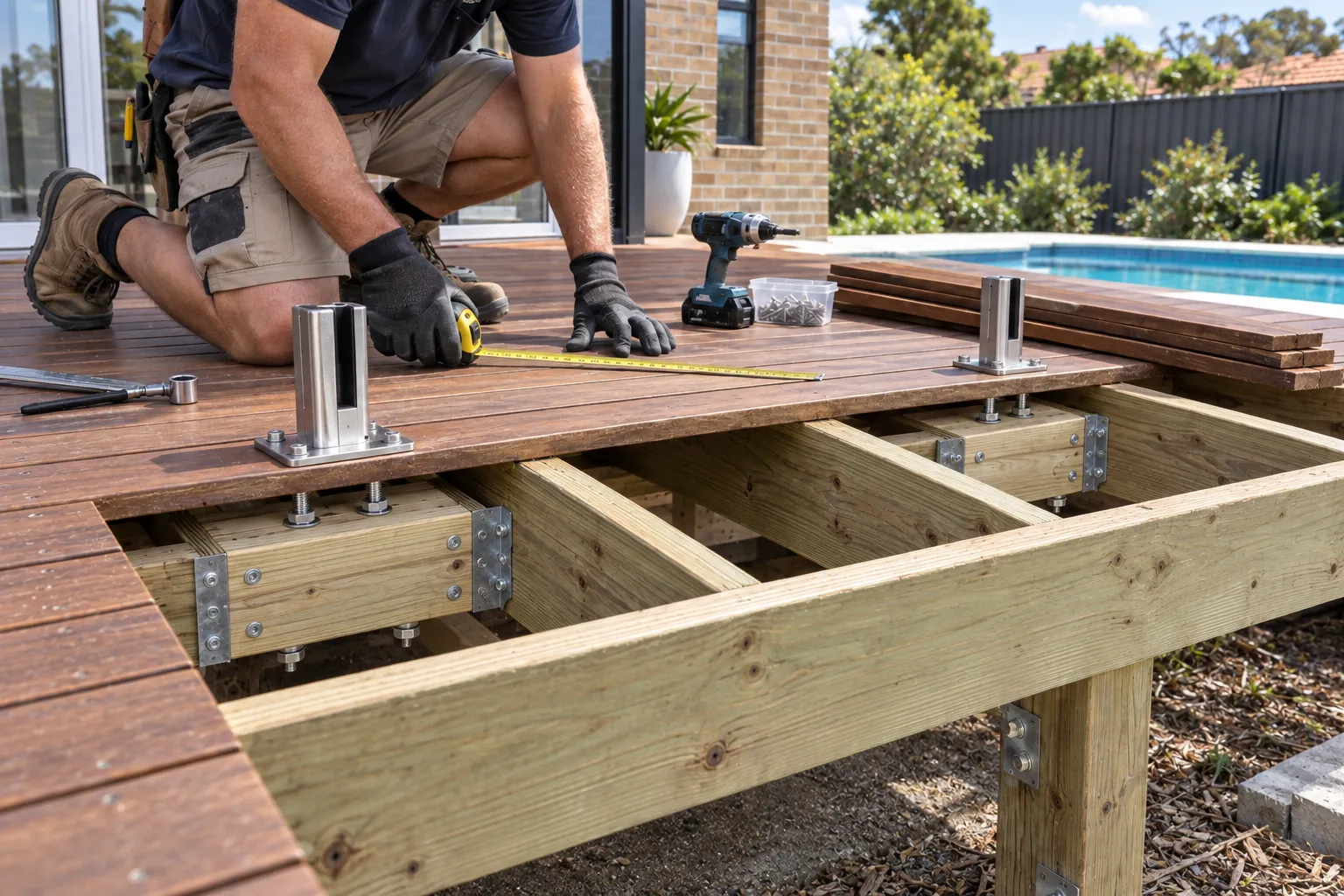
The required support depends on the deck's construction, fence layout and position of the fixing points. Before installation, the following areas should be assessed:
Any damaged, undersized or deteriorated structural members should be repaired or reinforced before the glass fencing is installed. Assessing the entire support structure helps ensure the fence remains stable rather than relying on the decking surface alone.
Glass pool fencing can be fixed to decking using several installation systems, depending on the deck structure, fence design and available fixing points. The selected system needs to provide a secure connection with the supporting structure beneath the decking.
The three common approaches are surface-mounted spigots, channel systems and face-fixed posts. The most suitable option depends on the fence design, position of the structural framing and layout of the pool area.
Surface-mounted spigots are commonly used for frameless glass fencing. They sit on top of the decking and hold the glass panels at their base.
The spigots need to be securely anchored into suitable support below the decking. The fixing points should also be level and properly sealed to help limit water entering the deck structure.
Channel systems use a continuous aluminium channel or base profile to support the glass. They can provide a clean appearance where a continuous fixing line can be created along the deck.
The channel must be anchored to suitable structural framing. Additional blocking or reinforcement may be required, while recessed channels also need appropriate drainage and waterproofing.
Face-fixed posts are attached to the side of the deck structure rather than directly to the top surface. They can be secured to an edge beam or other structural member using suitable bolts and backing plates.
This approach can be useful where the deck edge provides a suitable fixing point or where the surface needs to remain clear. The supporting edge structure must still be capable of carrying the fencing loads.
Yes, glass pool fencing can be installed on raised decking, provided the deck has sufficient foundation and can safely carry the additional loads from the glass and hardware. The joists, bearers, posts and footings all need to be suitable for the proposed fence.
Raised decks may require additional reinforcement if the existing structure has excessive movement, inadequate framing or deteriorated connections. Depending on the construction, this may involve strengthening joists, adding blocking or upgrading posts and footings.
The height and layout of the deck also need to be considered when planning the pool barrier. Stairs, railings and other nearby structures can affect the fence line, gate position and required clearances. With a compliant layout, raised decking can provide a suitable base for glass pool fencing.
The type of decking can affect how glass pool fencing is installed, particularly the fixing method, waterproofing requirements and ability of the surface to accommodate movement. Timber, composite, PVC and tiled decking each have different characteristics that should be considered during installation.
The surface material does not replace the need for suitable support beneath the fence. Its condition and construction can, however, affect how fixings are installed, how penetrations are sealed and how the finished fence performs over time.
Timber decking should be checked for rot, splitting, movement and other signs of deterioration before glass fencing is installed. Timber can also expand, contract and deteriorate with moisture exposure.
Suitable corrosion-resistant fixings should be used, while penetrations should be properly sealed to help prevent water entering the supporting structure.
Composite and PVC decking is used as a surface finish and may not be designed to support concentrated loads from glass fencing. Fixings typically need to pass through the boards and connect to structural framing underneath.
Manufacturer requirements should be checked before drilling or modifying the surface. Allowance for thermal expansion and movement may also be necessary to prevent stress on the fencing system or changes in alignment.
Tiled, paved or concrete-topped decks require additional care because the finished surface may conceal the foundation below. Drilling or cutting can also affect waterproofing, particularly where the deck contains a membrane or other moisture protection.
The fixing system should be selected based on the construction beneath the surface. Cracked or loose tiles, poor drainage and damaged waterproofing should be addressed before installation, with penetrations properly sealed.
Deck movement can affect the stability, alignment and performance of glass pool fencing. Timber and composite decks can move slightly as they respond to moisture, temperature changes, loads and age. Excessive movement, however, can place stress on fixings, glass panels and pool gate hardware.
For this reason, the deck should provide a stable and sufficiently rigid base before glass fencing is installed. Noticeable movement when the deck is walked across should be investigated rather than relying on the fencing system to compensate for structural movement.
Several signs can indicate that a deck may need attention before glass pool fencing is installed:
On raised decks, movement around posts and footings may also need to be assessed. These issues can become more noticeable once the rigid glass barrier and gate are installed.
If excessive movement is identified, the deck may require reinforcement before the fence is installed. Depending on the cause, this could involve strengthening joists, adding blocking, upgrading bearers or improving connections and supporting posts.
The fence should be positioned where the deck provides adequate support and fixed into suitable structural framing. Addressing movement beforehand can help prevent misalignment, reduce stress on the glass and hardware and support a stable pool barrier.
Pool gates require attention because they are a moving part of the barrier and must operate reliably every time. When installed on decking, the gate posts and hardware need adequate structural support, while the gate must also meet applicable NSW pool safety requirements.
The main considerations are the gate's latch and self-closing function, swing direction and clearances around the deck. These should be checked before installation to reduce the risk of movement or problems with gate operation.
The gate needs to be securely supported so the hinges remain aligned and the latch can operate correctly. The supporting structure should also be strong enough to handle the repeated loads created by opening and closing the gate.
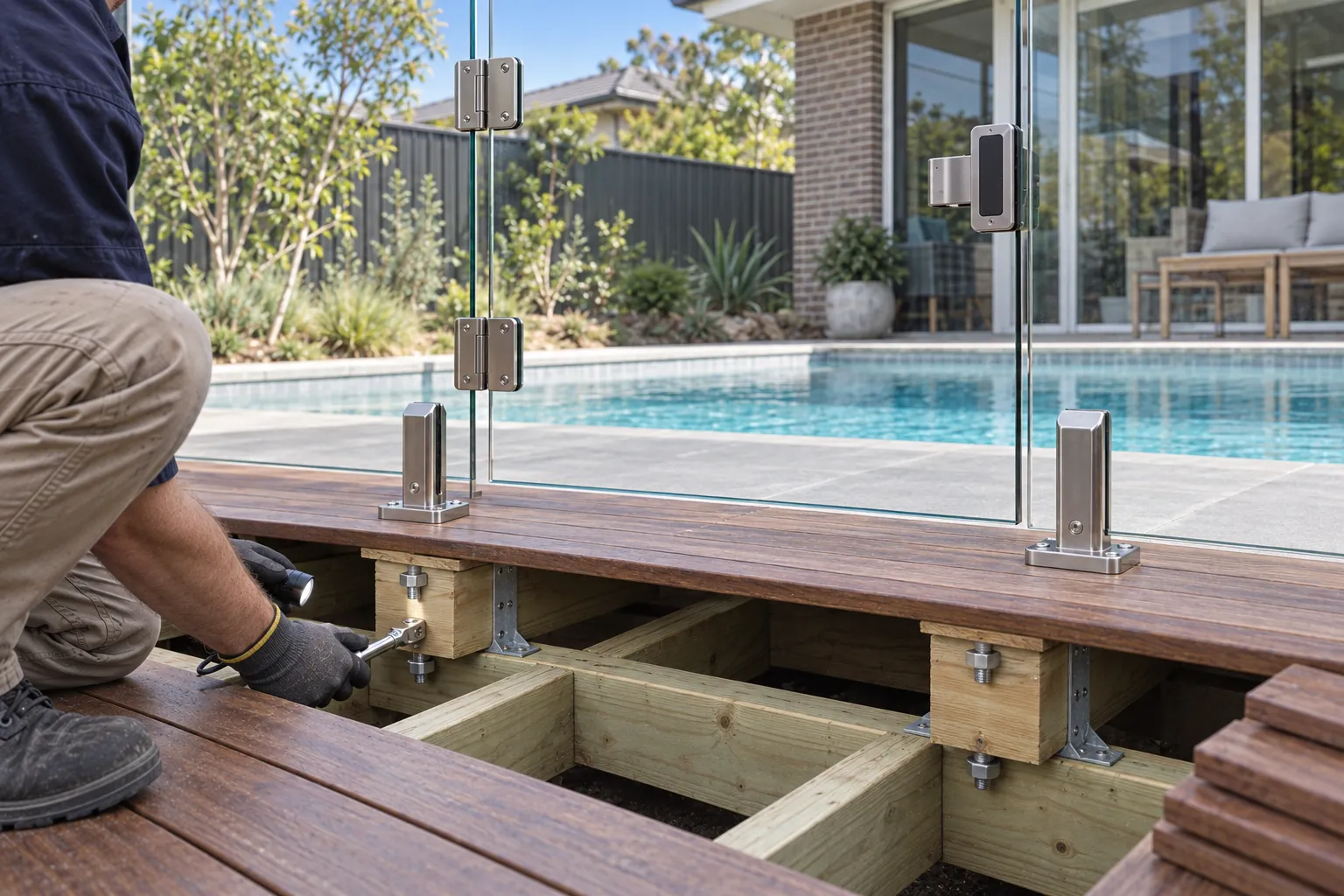
Important checks include:
A pool gate that will not close or latch properly may be affected by loose fixings, unsuitable hinge tension, misaligned hardware or movement in the supporting structure.
If the deck is flexible or the gate fixing points lack adequate support, movement can affect hinge alignment, closing speed and latch engagement.
The gate layout should provide enough space for the gate to operate freely without striking steps, posts, railings or other nearby structures. The gate should also open in the required direction and remain clear of features that could interfere with its operation.
The NSW pool barrier requirements state that pool gates must open away from the pool area and close and latch automatically without manual assistance.
Gaps around the gate need to remain consistent, particularly where the decking is uneven or may move. Drainage should also be considered so water does not collect around the gate or create surface changes that interfere with the bottom of the gate.
Careful planning of the gate position, supporting structure and surrounding deck can help maintain reliable operation while supporting a stable and compliant pool barrier.
Before installing glass pool fencing on decking, a final assessment should confirm that the deck, fixing system and proposed fence layout are suitable. Identifying problems before installation can help prevent movement, water damage, poor gate operation and costly modifications later.
Understanding the measurements required before installing glass pool fencing can help identify issues with the fence line, finished levels, gate position and fixing points before the glass is manufactured.
The main checks should include:
Any structural defects, drainage problems or unsuitable fixing points should be addressed before the glass is installed. A thorough pre-installation assessment helps ensure the deck is suitable for the proposed system and reduces the likelihood of problems after completion.
Standards Australia provides an overview of the updated Australian pool safety barrier standard, including guidance concerning barrier design, non-climbable zones and gate components.
The cost of installing glass pool fencing on decking depends on the size and design of the fence, the type of glass system selected, the condition of the deck and the amount of preparation required. A straightforward installation on a sound, well-supported deck may cost less than a project involving structural reinforcement, difficult access or extensive modifications.
The main factors that can influence the overall cost include:
A site assessment and quote can account for the fencing, hardware, labour, structural preparation and any necessary deck modifications. This provides a clearer indication of the total cost before installation begins and helps reduce the risk of unexpected expenses.
Installing glass pool fencing on decking can be a practical option when the deck is fundamentally appropriate and the installation is properly planned. The condition of the deck, available support, fixing method, decking material and potential for movement all need to be assessed before installation begins. Pool gate placement, drainage, waterproofing and applicable NSW pool safety requirements also play an important role in achieving a secure and compliant barrier.
Poolsafe Fencing can assess the requirements of the proposed installation and determine whether reinforcement or modifications are needed before the glass fencing is fitted. With the right structural preparation, suitable fixing system and attention to pool safety requirements, glass pool fencing can provide a durable and contemporary barrier that complements a deck while maintaining the required level of safety and performance.

