


Can Glass Pool Fencing Be Installed on Pavers?
October 13, 2026
Glass pool fencing can be installed on pavers, provided the underlying foundation is stable and the finished barrier meets NSW pool safety requirements. Proper preparation helps prevent loose panels, cracked paving and movement while maintaining a clean, modern finish around the pool.
For glass fencing in Sydney, the suitability of the paving, the fixing method and the surrounding ground conditions all affect the safety and durability of the installation. Assessing these factors early helps property owners plan for any necessary repairs, reinforcement or concrete footings.
Poolsafe Fencing determines a suitable installation approach for existing paved areas. With careful planning and appropriate structural support, glass pool fencing can provide lasting security while complementing the outdoor space.
Glass pool fencing requires a stable structural foundation to support the panels and fittings. Pavers provide the finished surface, while a suitable concrete slab or purpose-built footings provide the anchorage required by the chosen fencing system.
The foundation must be compatible with the fencing system and its manufacturer's installation specifications. Pavers laid over sand or loose bedding cannot provide reliable structural support on their own.
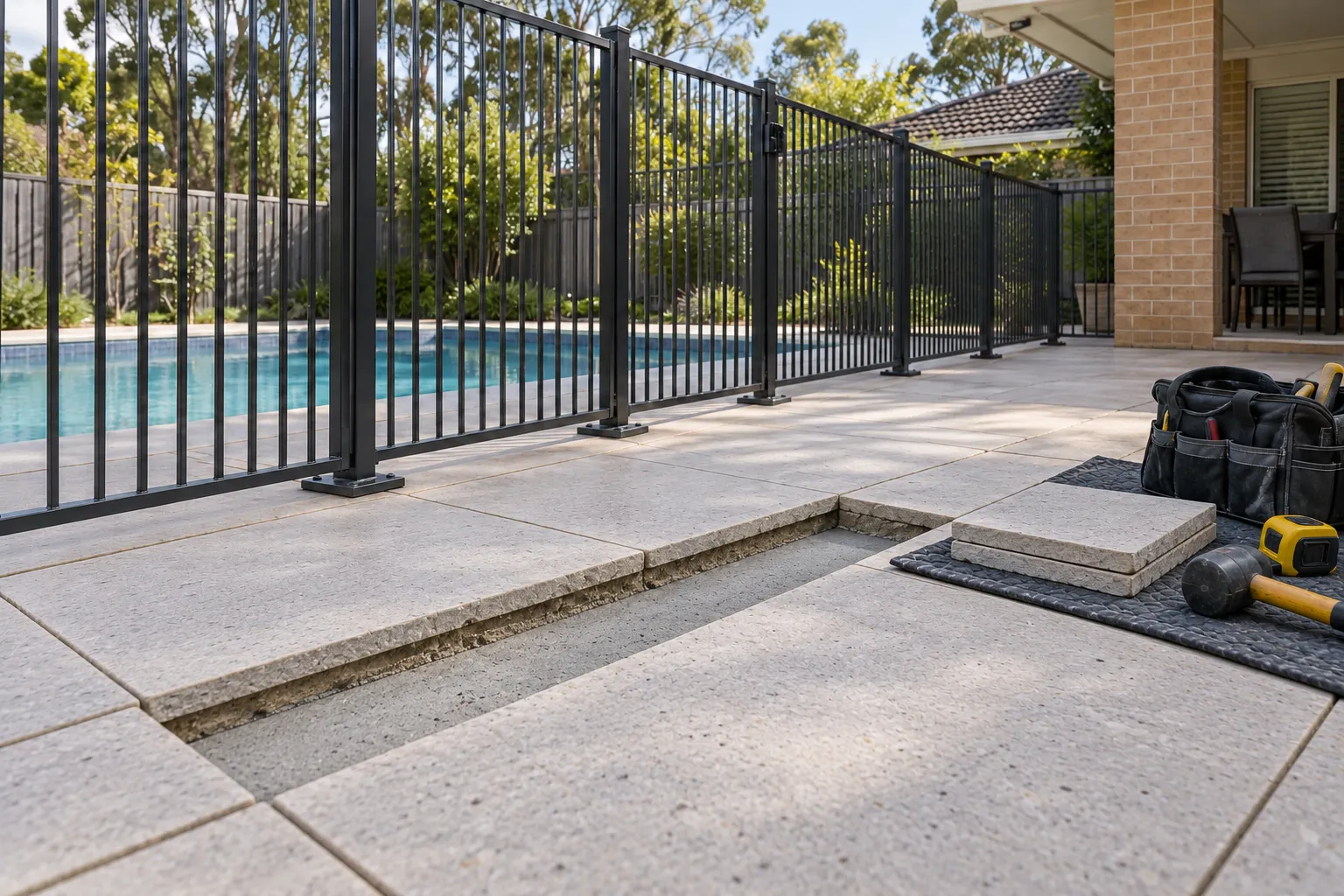
Depending on the site, the installation may require:
The required foundation thickness, fixing depth and reinforcement depend on the fencing system and site conditions. A professional assessment can determine whether the existing base is suitable or needs modification.
Cracked, loose or uneven pavers should be repaired before installation. If the ground beneath them is soft or poorly compacted, the affected area may need to be excavated and rebuilt to reduce the risk of settlement.
Drainage should also be checked to prevent water pooling around the fence line. Addressing these issues before installation helps protect the foundation and maintain the stability of the finished barrier.
Existing pavers do not always need to be removed before glass pool fencing is installed. If the paving is in good condition and supported by a suitable structural base, the fence may be installed without substantially altering the surrounding area.
Pavers can often stay in place when they are stable, level and properly supported. Depending on the fencing system, an installer may be able to drill through the paving and anchor the fittings into the concrete below.
Keeping the existing pavers can preserve the pool area's appearance and minimise disruption. However, the pavers themselves should not be treated as the sole structural support for the fence.
Pavers may need to be lifted, replaced or re-levelled if they are cracked, loose, sunken or installed over an unsuitable foundation. More extensive movement may require new concrete footings or reinforced pads beneath the fence line.
Assessing the paved area before installation helps identify the necessary repairs and reduce unexpected costs. Once the foundation is secure, the pavers can be reinstated and finished around the fittings.
The most suitable installation method depends on the paving material, the underlying foundation and the desired appearance. The fittings must be securely anchored to a suitable structural base and installed according to the fencing system's specifications.
The following are common fixing methods:
The existing foundation is a factor when selecting a fixing method. Pavers over a suitable concrete slab may accommodate core-drilled or surface-mounted fittings, while sand-based paving may require additional structural support.
The installer should also consider drainage, underground services, ground levels and gate positioning before drilling or excavation begins. These checks help reduce the risk of damaged paving, unstable fittings and misaligned panels.
Ground levels and drainage affect the stability, alignment and safety of glass pool fencing installed on pavers. Uneven surfaces can create excessive gaps beneath the barrier, while poor drainage may weaken the paving base and contribute to movement.
Pavers that have shifted or sunk should be repaired before installation. Uneven surfaces can cause panels to sit at different heights, place stress on the fittings and affect the barrier's compliance.
On sloping sites, the fence layout must account for changes in ground level while maintaining the required height and clearances. This may involve re-levelling sections of paving or adjusting the panel layout.
Standing water can soften bedding materials and contribute to subsidence. Prolonged moisture exposure may also affect metal fittings, particularly in coastal environments.
The paved area should be checked for pooling water, damaged joints and inadequate run-off. The ground around the gate must also remain stable so the gate can close and latch correctly without creating gaps that compromise pool safety.
Not all paving materials are suitable for glass pool fencing without additional preparation. Concrete pavers and natural stone may be suitable when they are in good condition and supported by an adequate foundation. Porcelain and thinner pavers may require more careful handling to reduce the risk of cracking during installation.
The main considerations are the paving material, its condition and the strength of the underlying foundation. Pavers installed over sand or loose bedding cannot reliably support the fence on their own, even if the surface appears level.
Where the existing base is unsuitable, additional concrete footings, reinforced pads or other structural modifications may be required. A professional can assess the site and recommend a fixing method that suits the paving and fencing system.
Glass pool fencing is secured by anchoring its spigots, posts or channels to a suitable structural foundation beneath or integrated with the paved surface. The correct fixing method can prevent shifting panels, loose fittings and movement that could affect the barrier's safety.
A stable foundation is essential, but the surrounding paving and drainage also need attention. To help maintain the fence's stability:
Periodic inspections can identify loose fittings, damaged pavers or a gate that no longer closes and latches correctly. Any movement should be investigated to determine its underlying cause rather than simply tightening the fittings. Understanding common pool gate problems can help property owners recognise closing and latching faults that need professional attention.
Prompt repairs help maintain the fence's stability and reduce the risk of problems developing into more extensive damage.
Yes, glass pool fencing installed on pavers can meet NSW pool safety requirements when the foundation, fixings and finished barrier comply with the regulations and Australian standards applicable to the property.
Pool barriers generally need to be at least 1.2 metres high, with gaps beneath the barrier no greater than 100 mm. The fence must also maintain the required clearances and non-climbable zones to help prevent children from accessing the pool unsupervised.
The NSW Government outlines the pool safety requirements for barrier heights, ground clearances and non-climbable zones.
Uneven pavers, excessive gaps and poorly positioned panels can compromise compliance even when the glass appears correctly installed.
Pool gates must meet applicable self-closing and latching requirements. Uneven paving or movement beneath the gate can interfere with its operation, so the surrounding surface must be stable and properly finished.
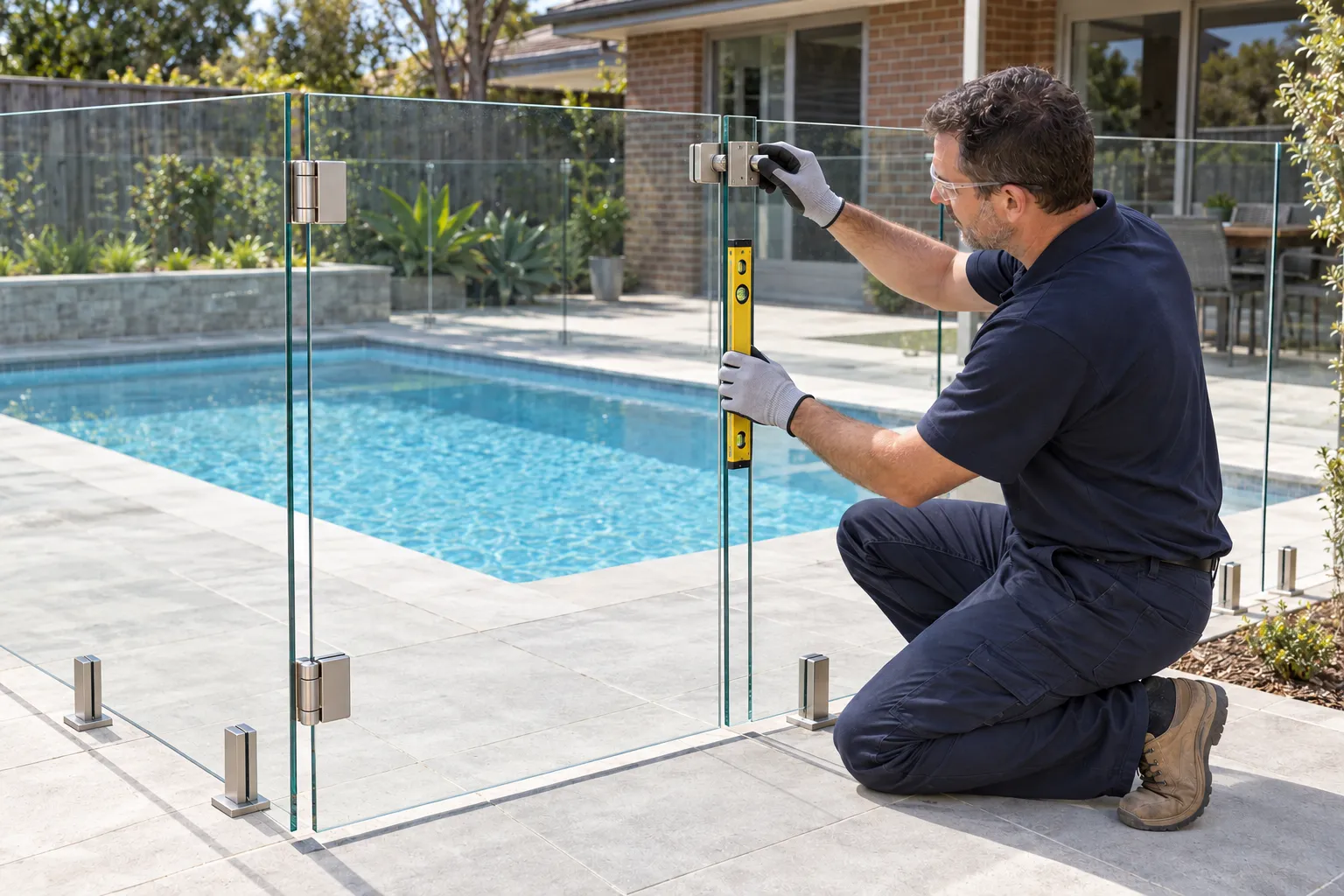
The applicable requirements can vary based on the pool's construction date and circumstances. Properties should confirm the relevant rules with their local council, a registered certifier or a suitably qualified fencing professional. The NSW Government's pool owner obligations page provides further information.
Yes, a professional installer should assess the pavers and underlying foundation before installing glass pool fencing. A site inspection helps identify structural issues and determine whether the existing paved area can accommodate the required fixings.
An installer should check for cracked or uneven pavers, loose sections, drainage problems and inadequate structural support. The assessment should also consider underground services before drilling or excavation, along with ground levels and gate positioning.
Identifying problems before installation helps determine whether the pavers can remain in place or need to be lifted, repaired or reinforced. It also allows the installer to recommend an appropriate fixing system and plan any additional groundwork before the glass panels are fitted.
This preparation can reduce unexpected repair costs and help ensure the finished barrier is stable, durable and compliant with applicable NSW pool safety requirements.
Glass pool fencing can be installed on pavers when the underlying foundation provides suitable structural support and the finished barrier meets applicable safety requirements. Assessing the paving, fixing methods, drainage and ground levels before installation helps prevent movement and avoid unnecessary repairs.
Poolsafe Fencing can help with the right installation approach for an existing paved pool area, including whether reinforcement or additional footings are needed. With suitable preparation and professional installation, glass pool fencing can provide a secure barrier while complementing the surrounding outdoor space.

