


How Do Retaining Walls Affect Pool Fence Compliance?
June 11, 2026
Retaining walls are often treated as a landscaping feature, but around swimming pools, they can affect barrier compliance and safety. Changes in ground levels, tiered gardens, steps and raised surfaces can alter how fence heights are assessed, create climbable points and affect whether a pool barrier satisfies the applicable requirements. For those planning or upgrading pool fencing in Sydney, understanding how retaining walls interact with pool safety regulations is an important part of achieving a compliant outcome. Poolsafe Fencing regularly encounters situations where retaining walls influence fence design, placement and certification requirements.
This article discusses how retaining walls can affect pool barrier compliance and what factors should be assessed before construction or renovation begins. Considering these issues early can help prevent costly modifications, failed inspections and avoidable safety risks.
The requirements that apply to an existing pool barrier can depend on when the pool was built and whether the barrier has since been modified or altered. Landscaping and renovation work should therefore be reviewed carefully before changes are made around an established pool fence.
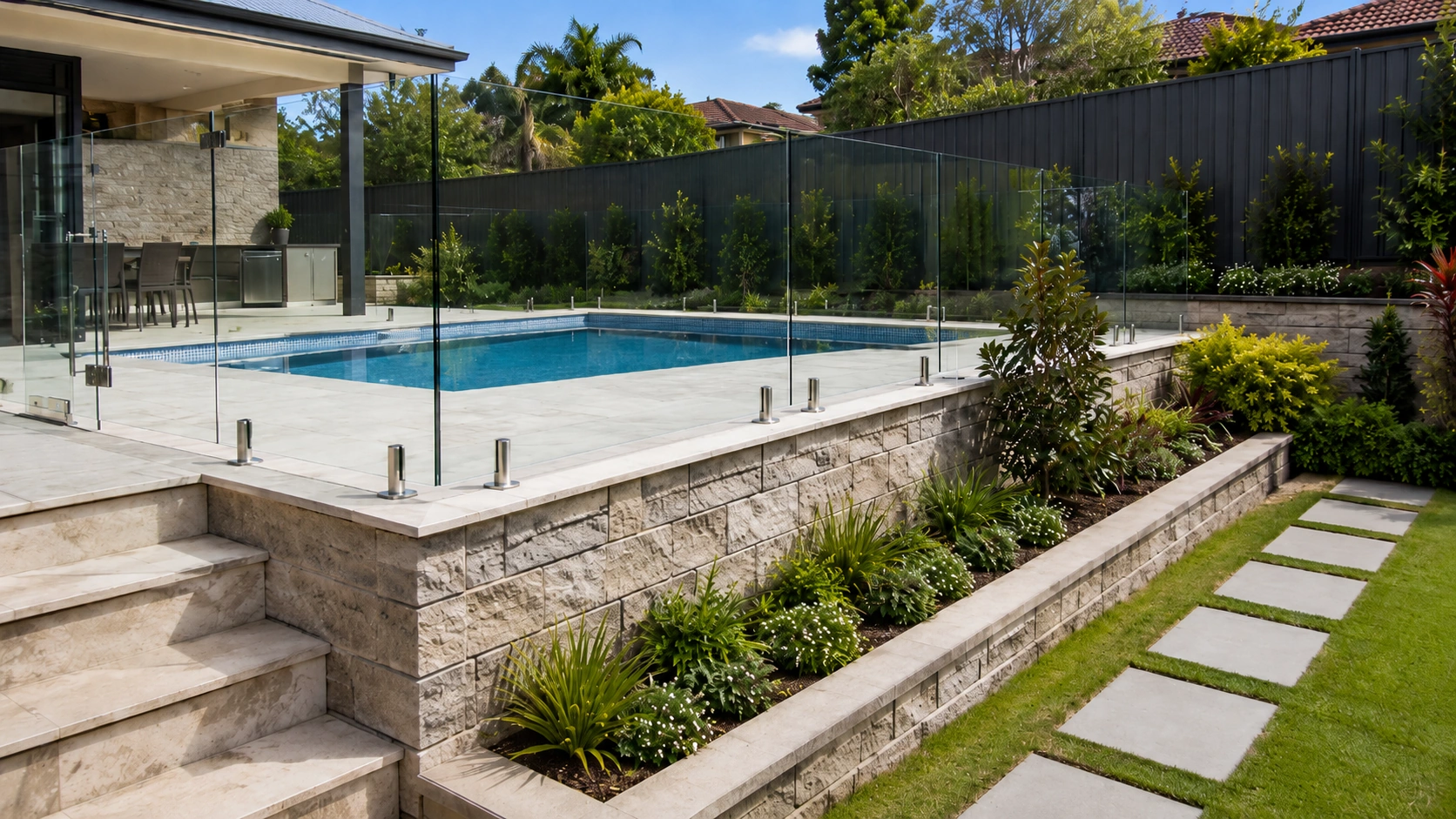
Retaining walls can affect how pool fence height is assessed and whether a barrier remains compliant. Pool barrier requirements are based partly on the height of the fence above the relevant finished ground level. When a retaining wall, raised garden bed or paved platform is introduced near a fence, it may create a higher surface that a child could access.
This can reduce the effective distance between the standing surface and the top of the barrier. A fence that was suitable when installed may no longer provide the required protection if later landscaping changes introduce an accessible raised level or a climbable point.
Not every raised surface automatically causes non-compliance. Its effect depends on factors such as its height, location, accessibility and relationship to the fence. However, any surface that a child could reasonably reach or stand on near a pool barrier should be assessed carefully.
The required minimum height depends on the barrier configuration.
Internal pool fencing generally needs to be at least 1.2 metres high when measured from the finished ground level outside the pool enclosure. Where a boundary fence forms part of the pool barrier, it generally needs to be at least 1.8 metres high.
This distinction matters where retaining walls are involved. A change in ground level may affect an internal pool fence differently from a boundary barrier. The direction from which the height is assessed can also vary depending on the type of fence and its position around the pool area.
For example, a fence may have been compliant when it was installed at the correct height above the original finished ground level. If a retaining wall, raised garden bed or additional fill is later introduced beside the barrier, the accessible standing surface may become higher. Whether this causes non-compliance depends on the type of barrier, the remaining effective height and whether the raised surface intrudes into a required non-climbable zone.
When a retaining wall raises the soil level near a pool fence, the higher surface may need to be considered as part of the barrier assessment. A child may be able to stand on the top of the wall, the filled area behind it or a nearby paved platform.
Common situations that can affect the barrier include:
The fence should be assessed in relation to the highest accessible surface near the barrier rather than only the original natural ground level.
A retaining wall does not need to be especially high to create an issue. Even a relatively modest increase in ground level can reduce the effective height of the barrier or introduce a surface that assists climbing.
Stepped or terraced retaining walls can create successive platforms that make a pool barrier easier to climb. Each tier may provide an intermediate standing surface, foothold or handhold.
Where a tiered retaining wall is close to the fence, each step may:
A tiered wall may appear harmless when viewed as part of the landscaping design. However, the combined effect of several levels can create a practical climbing route towards the top of the fence.
The assessment should consider how a child could approach the barrier and move between the different levels. The lowest ground level is not the only relevant consideration where higher surfaces can be reached.
The position of a retaining wall affects how it should be assessed.
A retaining wall outside the pool enclosure can create a raised surface that shortens the effective height of an internal pool fence. It may also create footholds, handholds or intermediate levels that make the barrier easier to climb from the approach side.
A retaining wall inside the pool enclosure can also cause issues. Depending on the layout, it may:
The complete layout must be considered. Compliance is not determined only by whether the wall sits inside or outside the pool area. Its distance from the barrier, height, surface width and accessibility are also important.
A retaining wall can unintentionally create footholds or handholds that affect the performance of a pool barrier. The relationship between the wall and the fence must be checked carefully, even where the nominal fence height appears suitable.
The focus should not be limited to the top of the wall. The wall face, coping, joints and surrounding landscaping can also make climbing easier.
Potential issues include:
A wall may also support movable objects such as pot plants, outdoor furniture, storage boxes or pool equipment. These items can create additional climbing points if placed near the barrier.
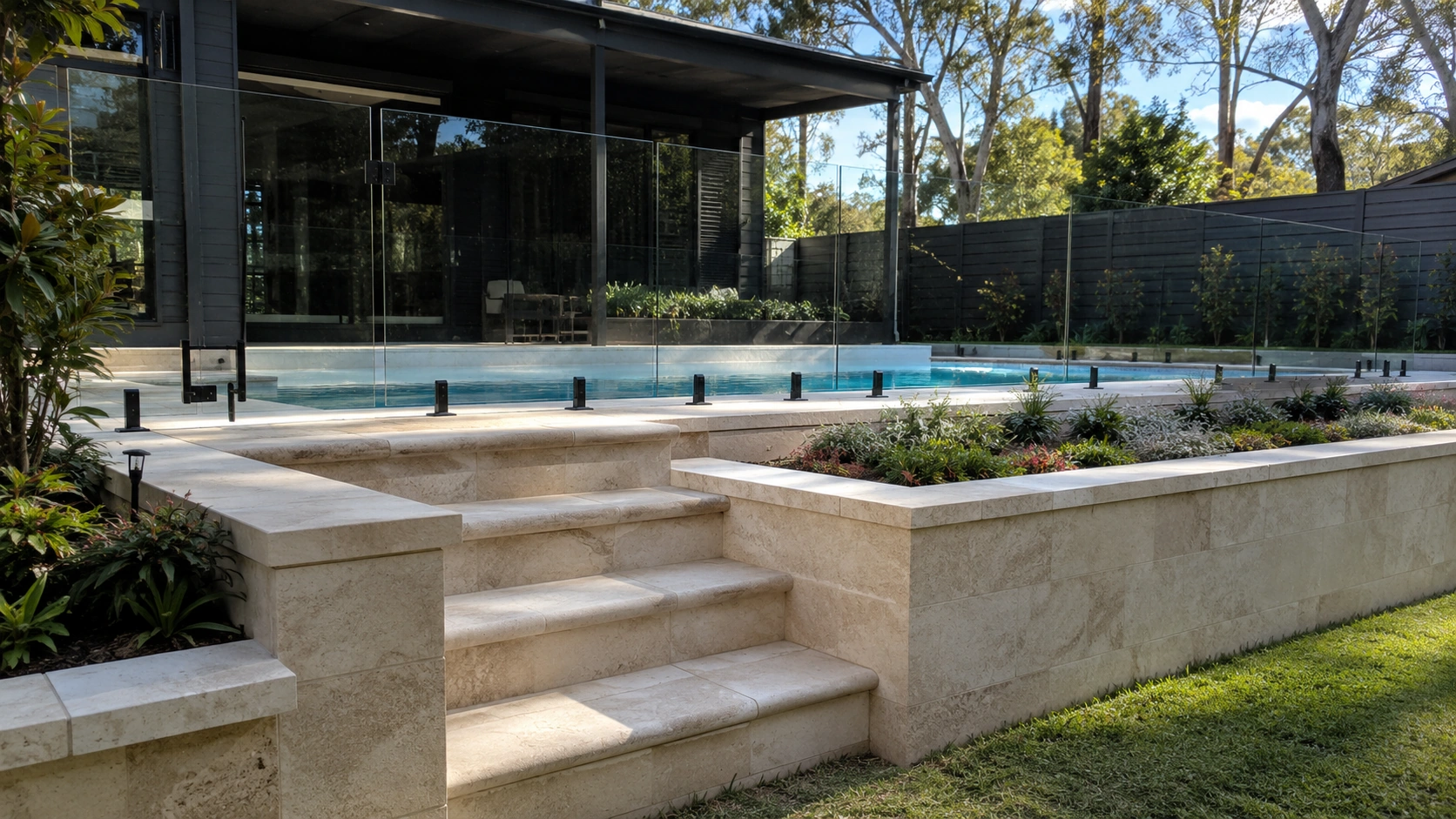
Pool safety requirements include non-climbable zones intended to prevent children from using nearby objects or surfaces to scale a barrier.
For a typical internal pool fence, the assessment includes an arc-shaped clearance measured from the top of the barrier towards the ground. Clearance is also required immediately inside the pool area. The relevant zones must be kept free from features that provide accessible footholds or handholds.
Trees, shrubs, pot plants, chairs, toys, ladders, barbecues and other objects should not be positioned where they could assist a child to climb the fence. Retaining walls, landscaping structures and changes in level must also be considered.
The assessment should consider the complete arrangement rather than relying only on one horizontal measurement between the retaining wall and the pool fence. The type of barrier, its height, the location of the wall and the surfaces a child could access all affect the outcome.
Retaining walls often include built-in features that can act as climbing aids.
Each step can operate like a stair towards the fence. A series of relatively low tiers may create a more significant climbing risk than a single smooth wall.
A broad cap can provide a standing surface. It can also encourage the placement of pots, ornaments or furniture close to the pool barrier.
Horizontal sleepers, posts and brackets may create ledges or footholds. Exposed fasteners or uneven joints can also assist climbing.
Large joints, uneven surfaces and projecting blocks may operate like a ladder. The appearance of the wall does not necessarily indicate whether it is suitable near a pool barrier.
Shrubs, trees and dense plantings can create handholds or climbing paths. Creepers growing over fences and walls can also make a barrier easier to scale.
Even narrow garden beds along the top of a retaining wall require careful planning if they introduce a higher standing level or encourage planting close to the fence.
Assessment should begin by considering how a child could approach the outside of the pool enclosure. Identify the highest accessible standing points and any surfaces that could be used as footholds or handholds.
The layout should then be reviewed to determine:
Where issues are identified, possible solutions may include:
The most appropriate solution depends on the site. Adjustments should be reviewed as part of the complete pool barrier design rather than treated as isolated changes.
Changes in ground level around a pool can compromise barrier compliance if they are not considered before installation. Slopes, steps and retaining walls may reduce effective fence height or introduce climbing points that are not obvious on a basic site plan.
Fence alignment should be planned in relation to the final landscaping levels, not only the site conditions before construction begins. This is particularly important where excavation, paving and garden works will occur after the pool fence is quoted or designed.
Many of the same considerations involved in deciding how to choose pool fencing for your backyard layout become especially important where the property has slopes, steps or changes in ground level.
On a sloping site, a fence installed at a uniform height can become less effective as the surrounding ground rises. The higher side of the slope brings the standing surface closer to the top of the fence.
The fence may need to be stepped or adjusted so each panel remains suitable in relation to the adjoining finished ground level. The design should also avoid creating a series of horizontal components that align with the slope and act like a ladder.
Sloping sites often require more careful coordination between the fencing contractor, landscaper and pool builder. A fence line that appears straightforward on a plan may need adjustments once the final levels are confirmed.
Steps and platforms near a pool barrier must be considered carefully. This includes garden stairs, deck steps, narrow concrete plinths, raised paving and landings beside retaining walls.
A top tread or landing may create a higher standing surface close to the fence. Stair risers can also provide intermediate footholds.
Where possible, avoid routing the fence directly along the edge of steps where the arrangement could create a climbing path. Depending on the site, it may be more suitable to increase separation, reposition the fence or enclose the steps within an appropriate section of the pool area.
Where a pool fence runs along or near a retaining wall, every accessible level should be assessed separately.
The top of a retaining wall may need to be considered if a child could climb onto it or use it to gain additional height against the fence. A lower level may also matter where the wall face itself creates footholds.
Depending on the layout, possible design options may include setting the fence on the higher level, increasing its height, creating greater separation from the retaining wall or installing an additional compliant barrier.
A smooth wall surface can reduce climbing opportunities, but it does not automatically resolve every issue. The overall barrier height, wall position, surrounding landscaping and relevant non-climbable zones still need to be considered.
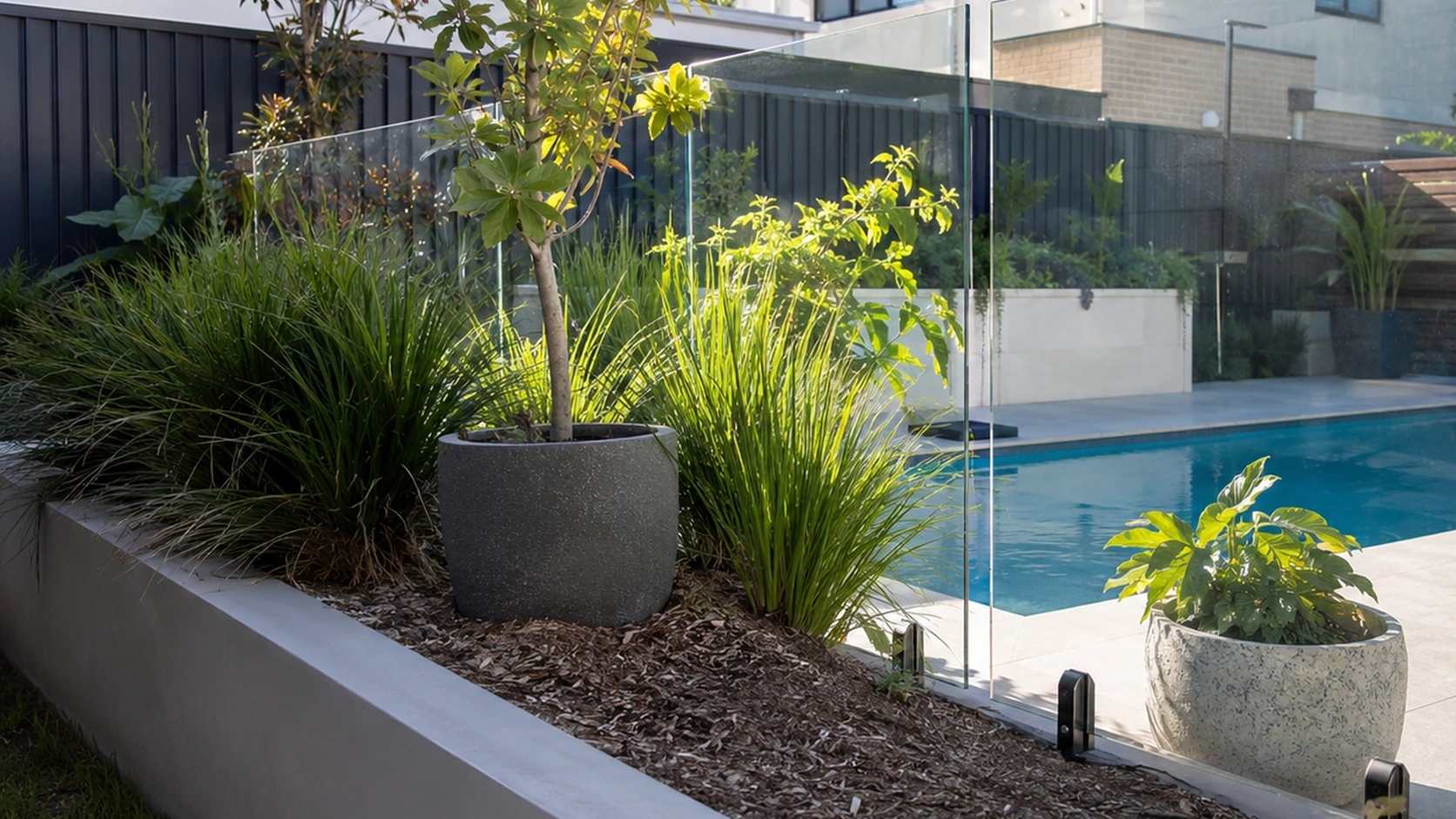
Landscaping around a pool rarely stays exactly as it was when the barrier was installed. Plants grow, soil levels rise and new features are added over time.
Any of these changes can unintentionally create footholds, handholds or accessible standing points. A barrier may become non-compliant even if the fence panels and gates have not been altered.
Pool owners should consider the ongoing condition of the entire area around the barrier rather than treating compliance as a one-time assessment completed at installation.
Plant selection and placement require particular care near retaining walls and pool barriers.
Trees, shrubs and dense hedges can provide stable handholds if planted too close to the fence. Fast-growing species can become an issue within a relatively short period.
A small shrub planted near a retaining wall may initially appear harmless. As it grows, its branches can spread across the fence line or form a structure that a child could use for support.
Clumping plants can also create dense masses near a barrier. Bamboo, ornamental grasses and similar species may require regular maintenance to ensure they do not intrude into critical clearance areas.
Plant taller or spreading species well away from the barrier. Regular pruning should also be planned so branches do not create footholds or handholds within climbing reach of the fence.
Landscaping work often involves adding soil, mulch or decorative toppings around retaining walls. Over time, these materials can build up and alter the surrounding finished ground level.
Raising garden beds or paving beside the wall can create an accessible platform that reduces the effective height of a nearby fence. Even a relatively modest change in level can be relevant where barrier dimensions and clearances are carefully assessed.
To manage this risk:
Future landscaping intentions should be considered when planning a retaining wall and pool fence arrangement.
Later additions such as built-in seating, raised planters, decorative screens, outdoor kitchens, garden stairs and paved entertaining areas can all introduce new climbing points if positioned near the barrier.
Where a terraced garden or second retaining wall may be added later, the initial fence layout should account for the expected finished levels. This can reduce the risk of having to reposition or replace the pool fence after landscaping work is completed.
Movable objects should also be considered. A compliant fence design can still be compromised if outdoor furniture, pot plants, toys or storage boxes are placed within climbing reach.
Retaining walls and landscaping changes can also affect pool gates.
A gate must continue to open outwards from the pool area and close and latch automatically. Changes in paving levels, soil levels or nearby garden edging can interfere with gate clearance or cause a gate to drag against the ground.
Movement in a retaining wall or nearby paving can also affect gate posts and alignment over time.
Check that:
A barrier is only effective when its gate continues to function correctly.
Retaining walls complicate pool barrier design and can push an otherwise suitable fence outside the applicable requirements. An early review helps identify issues created by changes in ground level before posts are installed or footings are poured.
Because every site is different, a retaining wall arrangement that is suitable on one property may create a problem on another. The outcome depends on the wall height, fence position, surrounding landscaping, accessible surfaces and type of barrier used.
Early review by an experienced pool fencing contractor can help identify practical design issues before installation begins. Where a formal compliance assessment is required, property owners should seek advice from the relevant council or a registered swimming pool inspector.
A compliance review should occur during the planning stage, before the retaining wall and pool fence are finalised.
Once the fence is installed, options for adjusting its height or position may become limited and expensive. Retaining walls can also affect several compliance factors at once, including finished ground levels, non-climbable zones, gate clearances and the location of future landscaping.
Seeking advice only at the final inspection stage may lead to avoidable rework. A relatively small design adjustment made before construction can be much simpler than repositioning a completed fence or rebuilding part of a retaining wall.
Pool builders, landscapers, fencing contractors and certifiers may work from different assumptions unless the finished levels and barrier layout are clearly documented.
The retaining wall and pool fence should be planned together. The site plan should identify:
Clear documentation helps avoid situations where a garden bed, platform or seating area is added after the fence is installed and unintentionally compromises the design.
Pool barrier safety requires ongoing attention.
Retaining walls can move, soil levels can rise and plants can grow into clearance areas. Pots, chairs and outdoor equipment may also be placed near the fence over time.
Property owners should inspect the area regularly and check that:
A pool fence should not be treated as a set-and-forget feature. The surrounding environment is part of the safety assessment.
Homeowners planning broader changes to the pool area may also benefit from reviewing this Sydney pool fencing guide, which covers common compliance issues, renovations and ongoing maintenance.
Retaining walls can influence whether a pool barrier remains compliant by altering effective fence heights, creating climbable surfaces and changing the way non-climbable zones are assessed.
What may appear to be a straightforward landscaping feature can affect fence performance, gate operation and safety outcomes when changes in ground level are not properly considered. Stepped walls, raised gardens, slopes, platforms and future landscaping additions all need to be assessed as part of the complete barrier layout.
Planning the retaining wall and pool fence together allows practical issues to be addressed before construction begins. Poolsafe Fencing can assess the proposed fence line, identify areas that may require closer consideration and install pool fencing suited to the finished layout of the property.

