


How Far Does a Pool Fence Need to Be From the Pool in NSW?
September 16, 2026
Knowing how close a pool fence can be to the water is an important consideration for pool owners in NSW. The required position depends on more than the distance from the pool edge, with fence height, surrounding structures, ground levels and non-climbable zones all affecting the final layout. Getting these details wrong can result in compliance issues, costly alterations and unnecessary safety risks.
Poolsafe Fencing can help understand the practical considerations involved in pool fencing in Sydney, from choosing an appropriate fence position to accounting for nearby decking, paving, garden beds and retaining walls. Planning these elements together can make it easier to create a safe and practical pool area.
The right fence position should provide a secure barrier while working with the existing layout of the pool area. Understanding the key placement requirements can help property owners avoid common compliance issues and plan the fence more effectively.
NSW pool fence placement requirements are governed by the Swimming Pools Act 1992, the Swimming Pools Regulation 2018 and the applicable Australian Standard, commonly AS 1926.1-2012. There is no single fixed distance that a fence must be from the edge of every pool. Instead, the barrier must provide a compliant enclosure while the surrounding area is managed to prevent potential climbing points.
The position of the fence can be affected by several factors, including:
As a result, the appropriate fence position needs to be considered in relation to the entire pool area rather than a measurement from the water alone. Two pools with similar layouts may require different fence positions because of differences in boundaries, landscaping, structures and ground levels.
There is no single minimum distance that a pool fence must be from the edge of a pool. The appropriate position depends on the pool layout, type of barrier, surrounding structures, finished ground levels and applicable safety requirements. In some properties, the fence can sit close to the pool edge, while other layouts may require more space to maintain a compliant barrier.
The fence position should be considered in relation to the pool coping, paving, decking and surrounding ground levels rather than measured from the water alone. Nearby retaining walls, garden beds, steps, structures or other features may also affect where the fence can be installed.
For this reason, the correct fence position needs to be assessed on site rather than based on a standard setback. Planning the barrier around the entire pool area can help ensure the final layout meets the applicable requirements while remaining practical for access and maintenance.
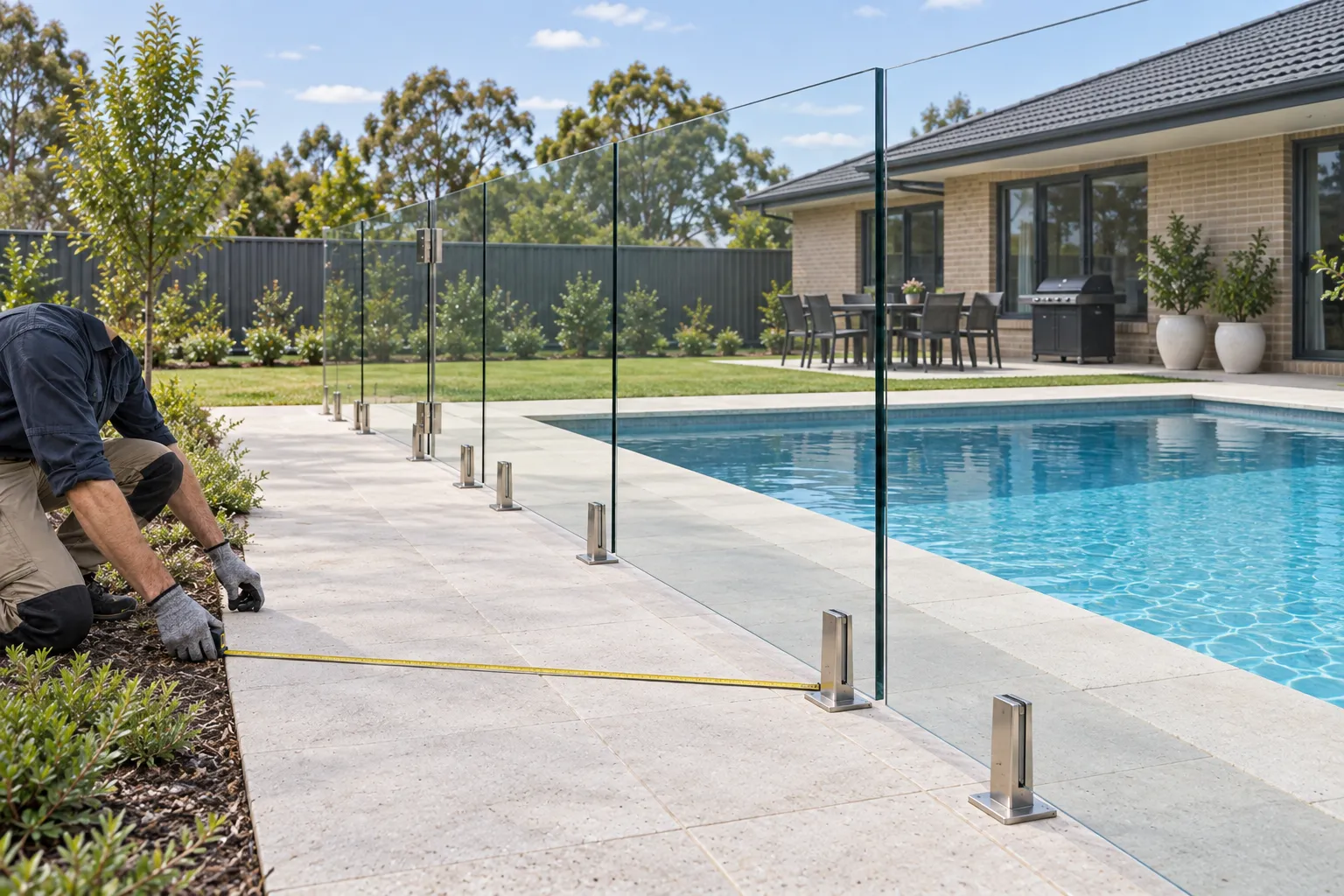
Non-climbable zones (NCZs) are an important consideration when positioning a pool fence. These areas are intended to prevent nearby objects or structures from being used to climb over the barrier. As a result, the fence location may need to change based on what is positioned around the pool.
Council guidance on pool safety requirements and inspections provides further information about non-climbable zones, gates, barriers and the inspection process in NSW.
The surrounding area should be checked for features such as:
Where changes in ground level are present, understanding how retaining walls affect pool fence compliance can help identify reduced fence heights and potential climbing points before the fence line is finalised.
The fence line should therefore be planned alongside the landscaping, structures and finished surfaces. Considering these features before installation can help maintain the required clear areas and reduce the risk of costly changes later.
Trees, furniture and other objects near a pool fence can create potential climbing points and affect compliance. The surrounding area should remain clear of features that could provide a foothold or handhold, with attention given to landscaping and items that may be moved or altered.
Consider the following:
The NSW Government pool-fence requirements explain that trees, shrubs, furniture, ladders, pot plants and similar objects must be kept outside the applicable non-climbable zone.
Keeping these areas clear from the outset can make it easier to maintain the barrier and reduce the need to relocate the fence or surrounding features later.
The shape and design of a pool can affect where a pool fence can be positioned. Straight-sided pools with open space around the perimeter are simpler to fence, while curved, irregular or multi-level designs may require more careful planning. The fence does not always need to follow the exact shape of the pool, provided it creates a compliant and continuous barrier.
Curved and free-form pools may suit a combination of straight, angled or curved fence sections depending on the available space. Pools with raised walls, steps, changing ground levels or adjoining decks also need to be assessed because these features can affect the fence layout.
The fence position should be planned around the finished pool, coping, paving, decking and ground levels rather than added after other work is complete. This can help avoid awkward gaps, impractical access paths or costly changes after construction.
Pools built close to a house, boundary or retaining wall may have limited room for a separate fence. Depending on the site, a suitable boundary fence or building wall may form part of the barrier, or an internal fence may be used to create a separate pool enclosure.
For complex or space-restricted layouts, planning the fence alongside the pool and surrounding features can make it easier to achieve a practical design while meeting the applicable NSW requirements.
Pool decking can affect where a pool fence is positioned because the finished deck level forms part of the surrounding surface considered when assessing the barrier. A raised or newly installed deck can change the effective fence height, available clearances and relationship between the pool, fence and nearby structures.
The fence should be planned around the finished decking level rather than the original ground level. This is important where decking is raised, slopes across the pool area or extends close to the proposed fence line.
Here are some considerations:
Where possible, the fence position should be established before the decking is installed. This allows the pool edge, deck levels, fence height and surrounding features to be considered as one layout.
For an existing pool, proposed decking changes should be checked against the current pool barrier requirements before construction begins. Coordinating both elements can help prevent the need to raise, relocate or redesign the fence after the deck is completed.
Boundary fences, retaining walls, buildings and other structures can have an effect on pool fence placement. They may form part of the barrier in some situations, but they can also create potential climbing points or limit the available space around the pool.
A boundary fence may be used as part of a pool barrier where it meets the applicable requirements. If the boundary cannot provide a suitable barrier, an additional pool fence may need to be installed within the property.
Property owners should confirm whether an existing boundary fence can be used as a pool fence, as its height, gaps, condition and surrounding non-climbable zones can all affect its suitability.
Retaining walls and changes in ground level also need to be considered because they can affect the effective height of the barrier and create steps or platforms near the fence. The fence may therefore need to be repositioned or designed around these features.
House walls, windows, sheds, decks, garden beds, fixed furniture and outdoor equipment can all affect the fence layout. Depending on their position and design, they may create potential climbing points or restrict where the barrier can be installed.
Before finalising the fence line, nearby structures should be assessed alongside the pool, finished ground levels and required clear areas. Identifying these issues early can help determine whether the fence, surrounding feature or overall layout needs to be adjusted.
Limited space does not automatically prevent a compliant pool fence from being installed, but it can make the layout more challenging. Narrow areas between the pool and a boundary, building, retaining wall or decking may require the fence position to be carefully planned rather than based on a standard setback from the water.
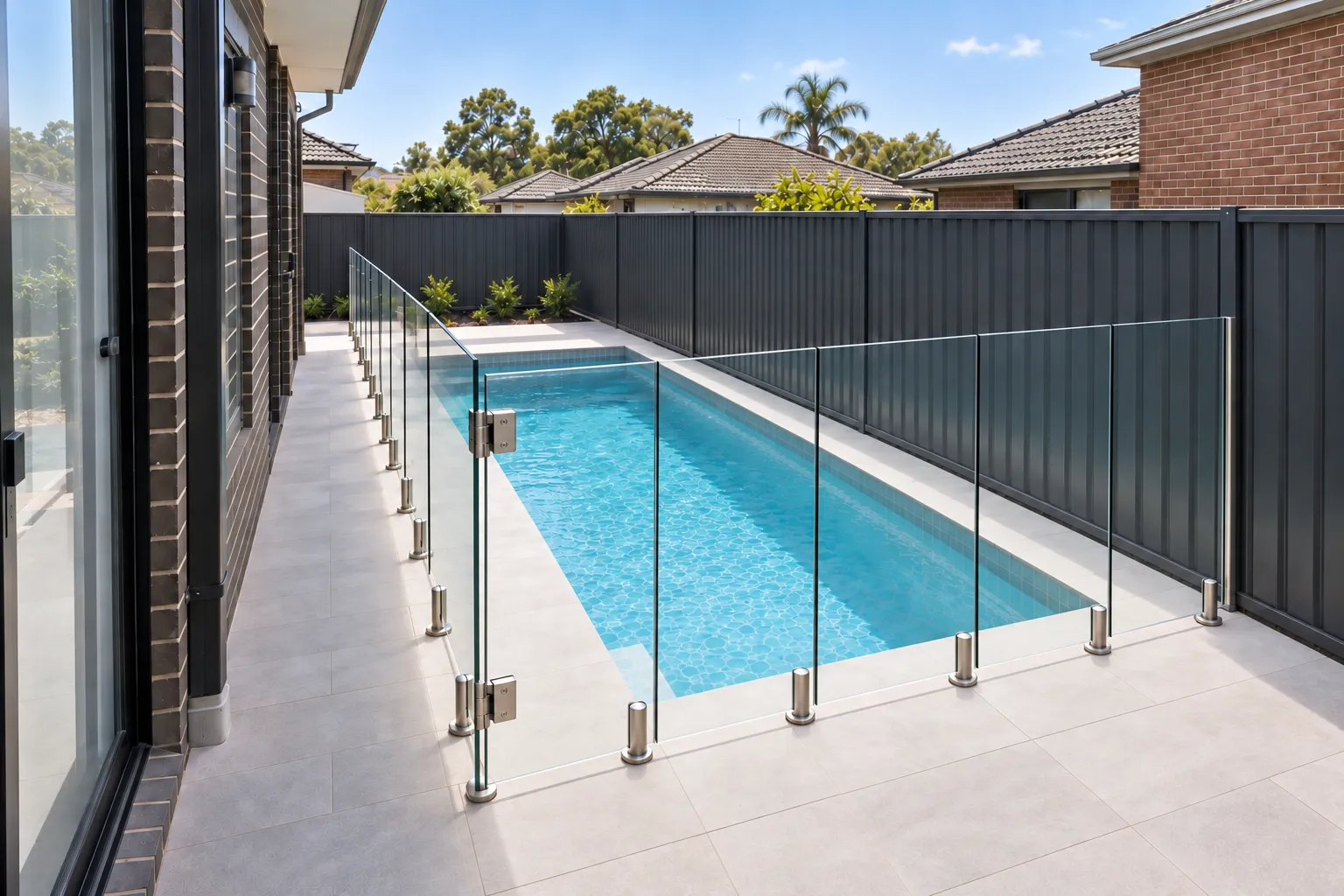
Depending on the site, possible solutions may include:
The most suitable approach depends on the pool layout, finished ground levels and surrounding features. Assessing these factors before construction or landscaping is completed can help avoid costly changes and determine whether the existing space can accommodate a compliant barrier.
Before choosing a pool fence position, the proposed layout should be checked against the applicable requirements and the property’s conditions. The fence needs to provide a continuous barrier while working with the pool edge, finished ground levels, boundaries and surrounding structures.
Factors to check include:
Checking these factors before finalising the fence line can help identify issues early. It also makes it easier to create a pool area that is practical to use without requiring costly changes after the fence, paving or landscaping has been completed.
Yes. Pool fence placement should be checked before installation and whenever changes are made to the pool area. Adding or altering decking, paving, landscaping, retaining walls, ground levels or nearby structures can affect an existing barrier, even if the fence itself has not moved.
The assessment should consider the entire barrier and surrounding area, not simply the distance between the fence and pool. This includes the fence height and gaps, gates, ground levels, non-climbable areas, boundary fences and nearby features that could affect the barrier.
Checking the proposed fence position before construction or renovations can help identify potential compliance issues early and reduce the risk of costly changes later. For existing pools, a qualified pool safety professional can assess the barrier and identify any adjustments needed to meet the applicable requirements.
Pool fence placement in NSW depends on more than the distance from the water. The barrier must suit the pool layout, surrounding structures, ground levels and applicable non-climbable zone requirements. Careful planning can help avoid issues caused by decking, landscaping, retaining walls or boundary fences.
Poolsafe Fencing can assist property owners with planning and assessing pool fence layouts, where space is limited or existing structures affect the available options. Checking the requirements before installation or modifying an existing pool area can help reduce costly changes while supporting a safer, compliant pool environment.

