


When Is the Best Time to Install Pool Fencing in Sydney?
May 15, 2026
Timing plays a major role in the success of any pool fencing project. Installation affects safety compliance, construction flow, budgeting and how soon the pool area can legally be used. For homeowners planning pool fencing in Sydney, factors such as seasonal weather, council requirements, builder schedules, paving levels, landscaping plans and material lead times can all influence when the fence should be installed.
A poorly timed installation can delay pool use, increase labour costs and lead to rushed compliance decisions that affect the final appearance and functionality of the area. Poolsafe Fencing explains how installation timing can affect each stage of a pool project, from excavation and paving through to landscaping and final certification. This article also looks at the advantages and drawbacks of different installation periods, the risks of delaying fencing and the steps needed to coordinate fencing with other trades.
The timing of pool fence installation has a direct impact on safety, cost, compliance and convenience. Choosing the right point in the pool or renovation timeline can prevent legal issues, reduce disruption around the home and help keep children and visitors safe from the moment the pool area becomes a hazard.
Pool fencing should never be treated as an afterthought. Australian Standard AS 1926.1 and NSW pool safety laws require a compliant barrier around any pool capable of holding more than 300 mm of water. This means fencing must be planned before the pool is filled or used, not arranged only once the rest of the backyard is complete.
For a new pool, the best timing is usually after the pool shell is complete and surrounding levels are confirmed, but before final landscaping makes access more difficult. Many projects follow a sequence similar to this:
This order helps the fence sit at the correct height, align with the finished surfaces and meet safety requirements without needing expensive adjustments later. It also gives installers clear access before garden beds, turf, retaining walls or outdoor features restrict movement around the site.
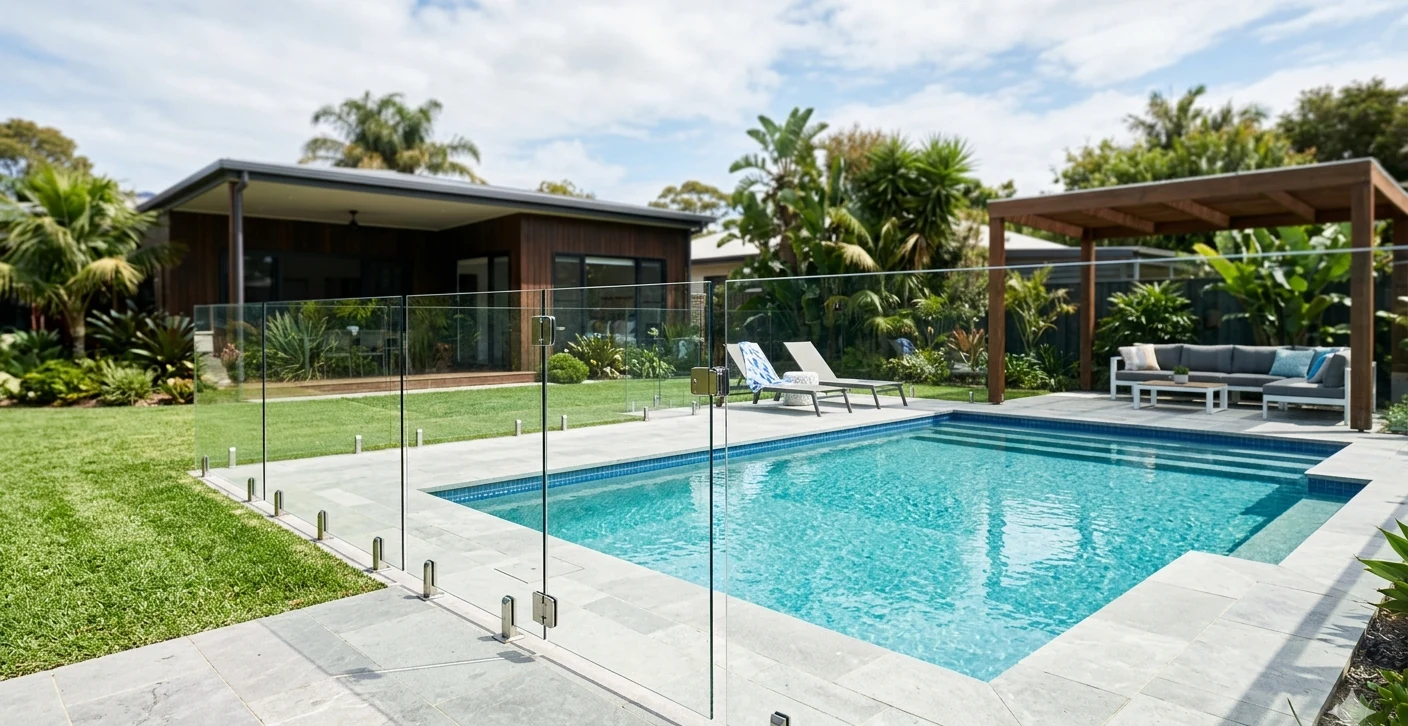
Pool fencing can be installed at most times of the year, but some seasons are more practical than others. Weather, demand and lead times can all affect how quickly the project can be booked and completed.
Late autumn and winter are often the most practical times to install pool fencing in Sydney. Demand for pool-related services is generally lower, which can mean shorter lead times and more flexibility with installation dates.
Sydney winters are also relatively mild, allowing outdoor work to continue comfortably on most days. Cooler temperatures can make site work easier and may reduce delays caused by extreme heat. With fewer homeowners rushing to prepare pools for summer, it can also be easier to coordinate pool fencing with other trades such as landscapers, pool builders, concreters and tilers.
For homeowners renovating an outdoor area before the next swimming season, winter planning can help avoid the pressure of last-minute bookings in spring and summer.
Spring is a good option for homeowners who want the pool ready for summer. The weather is warmer, daylight hours are longer and final landscaping can often be completed around the same time.
However, spring is also when demand begins to rise. From September onwards, many installers become busier as households prepare their pools before the Christmas and summer holiday period. Anyone aiming for a spring installation should book early and allow a buffer for weather delays, inspections or design adjustments.
Spring weather can also be variable, with windy days and storms occasionally affecting installation. Planning several weeks ahead helps reduce the risk of the pool being finished but unavailable because fencing is still waiting to be installed.
Summer is usually the least efficient time to arrange pool fencing. It is already the peak swimming season, so installers are often heavily booked and there may be less flexibility with dates.
High temperatures can also make on-site work more difficult, particularly when handling glass panels, metal components or drilling into hard surfaces. Summer storms can create further delays if work needs to stop for safety reasons.
For families with children, summer is when fencing should already be in place. Waiting until this period to organise installation can leave the pool unusable or non-compliant at the exact time it is needed most. A better approach is to plan installation at least 6 to 8 weeks before the intended first swim, allowing time for materials, installation, inspections and minor adjustments.
For a new pool, permanent fencing should generally be installed after the pool shell is completed and the final pool position is confirmed. Excavation, plumbing, backfilling and machinery movement can all affect site levels and access. If posts are installed too early, they may be damaged or positioned incorrectly once the surrounding surfaces are finished.
Temporary barriers are important during construction, especially once the pool shell can hold water. Even before a pool is officially in use, an open excavation or partially filled shell can create a serious safety risk. A compliant temporary barrier may be needed until the permanent fence can be installed.
Permanent fencing is usually best installed once:
This timing allows the fence to be installed with greater accuracy and reduces the likelihood of posts, panels or fixings being affected by later construction work.
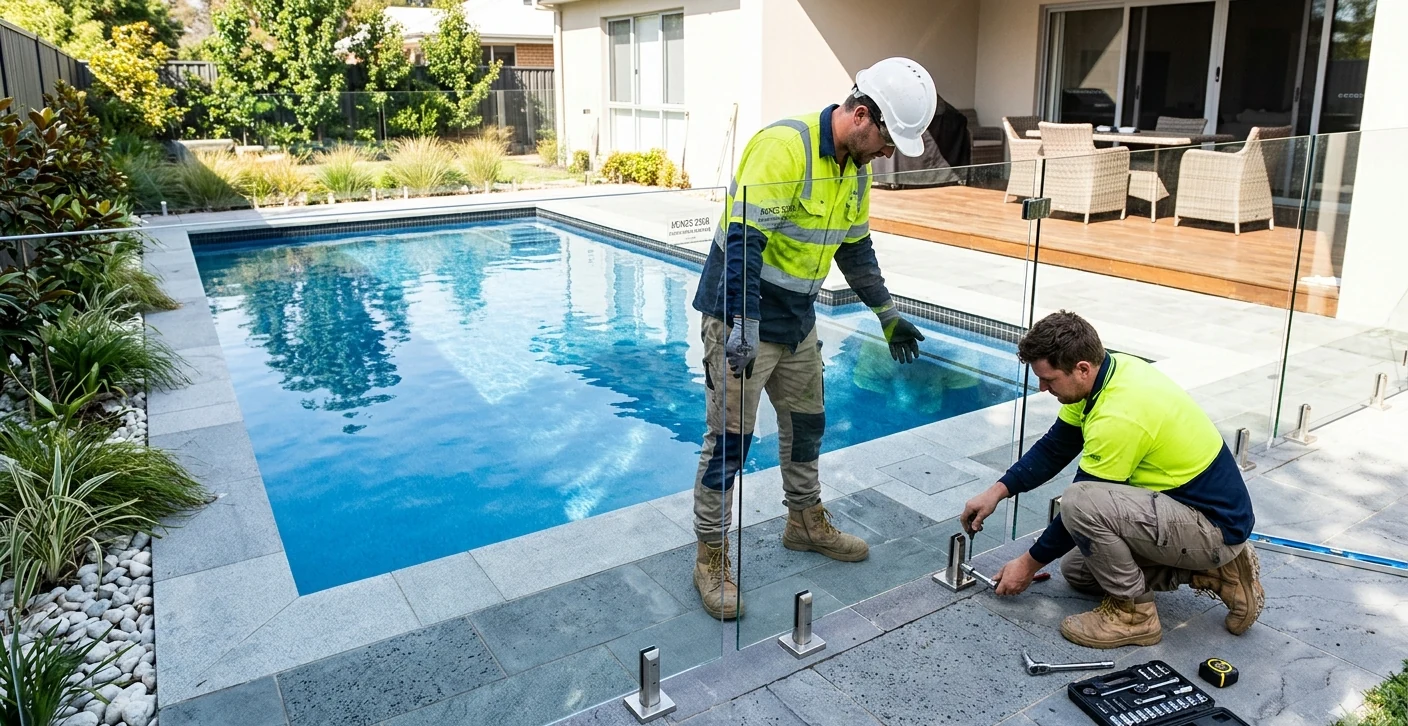
Paving and landscaping have a direct impact on pool fence compliance. The 1200 mm minimum pool fence height is measured from the finished ground or paving level. If fencing is installed before paving, decking or garden beds are raised, the final height may fall below the legal requirement.
The most reliable approach is to confirm final surface levels before installing the fence. Ideally, the pool coping and main paved areas should either be completed or fully set out with finished levels marked. This allows fence posts and panels to be measured correctly from the surfaces that will actually remain in place.
Raised platforms, steps, retaining walls, planter boxes and seating areas also need to be considered before installation. These features can create climbable zones if they are too close to the barrier. In sloping yards, careful planning is even more important because uneven ground can create gaps under panels or awkward step-downs.
Landscaping should be planned around the fence line, not added without considering compliance. Trees, dense shrubs, planter boxes and garden walls can all create footholds if positioned too close to the barrier. Soil and mulch levels also matter. Raising garden beds after installation can reduce the effective fence height and create compliance issues.
A good sequence is to complete major hardscaping first, install the pool fence once levels are confirmed and then finish planting around the completed barrier. This helps the fence remain compliant while still allowing the outdoor area to look cohesive.
Leaving pool fencing until the end of the project can create safety risks, inspection delays, higher costs and design compromises. A pool may look finished, but it cannot be legally used until a compliant barrier is in place.
An unfenced or partially fenced pool is a serious hazard as soon as it can hold water. Children may access the area during construction, especially if the site is part of a family home or is near neighbouring properties. Temporary furniture, loose panels or informal supervision are not safe or compliant substitutes for a proper barrier.
Late installation can also delay final inspections, certification or property transactions. In NSW, pool owners need to meet registration and compliance requirements, and properties with pools may need the correct documentation before sale or lease. If the fence fails inspection, rectification work may be needed before the pool can be approved or used.
Cost is another issue. If paving, decking, garden beds or outdoor structures have already been completed without considering the fence, installation can become more difficult. Installers may need to core drill through finished surfaces, use custom brackets, work around restricted access or repair damage to new landscaping. These extra steps can increase labour costs and affect the final appearance.
Late decisions can also limit material choice. Popular glass and aluminium fencing styles may have lead times, especially during busy periods. Waiting too long can force homeowners to choose what is available quickly rather than what suits the design, budget and long-term use of the area.
Good preparation helps pool fence installation run more smoothly and improves the chance of passing inspection the first time. The fence layout should be confirmed well before the installation date, including the position of gates, panels, posts and any sections close to walls, windows, steps or garden features.
The proposed fence line should be marked clearly on site using string, paint or set-out markers. This helps identify issues such as uneven ground, drainage points, irrigation pipes, tree roots or access restrictions before the installer arrives. Gate locations should also be checked carefully so entry points are practical for everyday use while still meeting pool safety rules.
Surfaces should be stable and ready for installation. Concrete should be cured, pavers should be secure, tiles should be laid and grouted, and loose soil should be compacted where posts are being installed. If the fence will be installed near garden beds, soil levels should be close to their final height so measurements remain accurate.
Underground services should also be located before drilling or digging begins. Power, gas, water, drainage and irrigation lines may run close to pool areas, especially in renovated backyards. Service diagrams or cable location checks can help reduce the risk of damage during installation.
Successful pool fence installation depends on more than choosing the right material or style. Timing affects compliance, safety, construction sequencing, access, cost and how well the finished fence integrates with the rest of the backyard.
For most Sydney pool projects, the best approach is to plan fencing early, coordinate it with paving and landscaping, and avoid leaving installation until the peak swimming season. Autumn and winter often provide the most flexible installation window, while spring can work well when booked early. Summer installation is possible, but it is usually less efficient and carries a greater risk of delays.
By scheduling pool fencing at the right stage of the project, homeowners can avoid unnecessary rework, reduce compliance problems and ensure the pool area is safe, functional and ready for use when needed.

